
Why Every Cancer Patient Deserves a Becky
What one hour and one nurse navigator can do for a person falling apart

Lesley was standing in front of a room full of teenagers when the words “invasive ductal carcinoma” appeared on her watch. She Googled them from her desk while her students took a test: “This is the most common form of breast cancer.”

She grabbed her car keys and walked out. Her best teacher friend caught one glance at her face and ran out of her own classroom. Within minutes, Lesley was on the floor of an empty classroom, screaming her daughter’s name.
An hour later, her phone rang.
“I’m Becky, your oncology nurse navigator. This is the most common type of breast cancer, and it’s the most treatable kind. You’re going to be fine. From now on, if you need anything, you call me.”
That phone call—made within sixty minutes of a pathology result flagging in the system—transformed what could have been months of chaos into something manageable. In the latest episode of Kicking Cancer’s Ass, Lesley describes how Becky became the bridge between terror and treatment.
The Gap Most Patients Fall Into
Here’s what struck me when I interviewed twenty-five people for my book Crushing the Cancer Curveball: Lesley was the only one who had a nurse navigator.
The only one.
A 2022 national survey found that fewer than 23% of cancer programs have dedicated patient navigators. Yet research published in the Journal of Clinical Oncology demonstrates that patients with nurse navigators report significantly fewer problems with psychosocial support, care coordination, and obtaining information—benefits that persist for eight months after the last navigator contact.
Lesley experienced this firsthand. During that first devastating phone call, while she was on the floor clutching her mother’s leg, Becky was already strategizing:
“She said, I have the perfect oncologist for you. She’s amazing with people your age. She’s gonna be a really good fit for you. I will never forget that sentence. How awesome that a nurse who basically handed me a pamphlet on what a needle biopsy would be, also knew how to find an oncologist who would be a good fit for someone. That’s next level.”
Becky didn’t just match Lesley with the right doctor—she gave her something priceless in that moment of free-fall: the sense that someone competent was holding the net.

What Navigation Actually Looks Like
Becky called within an hour of a terrifying diagnosis. She had Lesley’s case in front of her. She knew the oncologists in the system and which ones connected well with younger patients. She gave Lesley her cell phone number. She said “call it” as she meant it.
“Right away, here’s my number. You call this number. This goes to my cell phone. Anything. If you need an appointment on a certain day, if you need something moved, she’s like, I am your person going through this with you. She knew how to get an appointment. She knew who to talk to if I needed to make changes. She said all that within the first phone call.”
A meta-analysis found that nurse navigators improved timeliness of care by an average of twenty days during the critical screening-to-treatment window. Patients with navigators were 13% to 45% more likely to complete cancer care services. But Lesley’s story illuminates something statistics can’t capture: the difference between drowning and swimming often comes down to whether someone reaches out a hand in the first hour.
The Systemic Failure We Accept
Last May, I spoke with a friend diagnosed with advanced pancreatic cancer. He told me, “I keep waiting for someone to call me and say, I’m going to walk you through this.”
I had to tell him the truth: “That person is you.”
This is what we’ve normalized. We diagnose people with life-threatening illness and expect them—in their most overwhelmed state—to become project managers of their own care. To research oncologists. To coordinate between specialists who don’t talk to each other. To navigate insurance while wondering if they’ll see their children grow up.
Lesley captured the absurdity of this expectation:
“I said, I wanna be done by Thanksgiving. Can I have the surgery by Thanksgiving? And it was like September 30th. And she’s probably thinking in her head, oh my God, yeah, right, girlfriend, like how about two Thanksgivings from now?”
Becky didn’t mock her naïveté. She met Lesley exactly where she was and gently introduced reality while maintaining hope. That’s why nurse navigators matter—and why so few patients have access to them.
What You Can Do
If your cancer center has a nurse navigator program, use it. Ask for the navigator’s direct number. Call before appointments. Let them coordinate what you shouldn’t have to coordinate on your own.
If your cancer center doesn’t have a navigator, become your own—or deputize someone who loves you to play that role.
And here’s what I’m doing: As a member of UCSF’s Patient Family Advisory Council, I’m advocating for navigation programs to become standard care. When I heard Lesley’s story, I told the advisory board, “Look at what they’re doing in Pittsburgh. This program is life-changing, better care, and better business.”
The Mindset That Carried Her Through
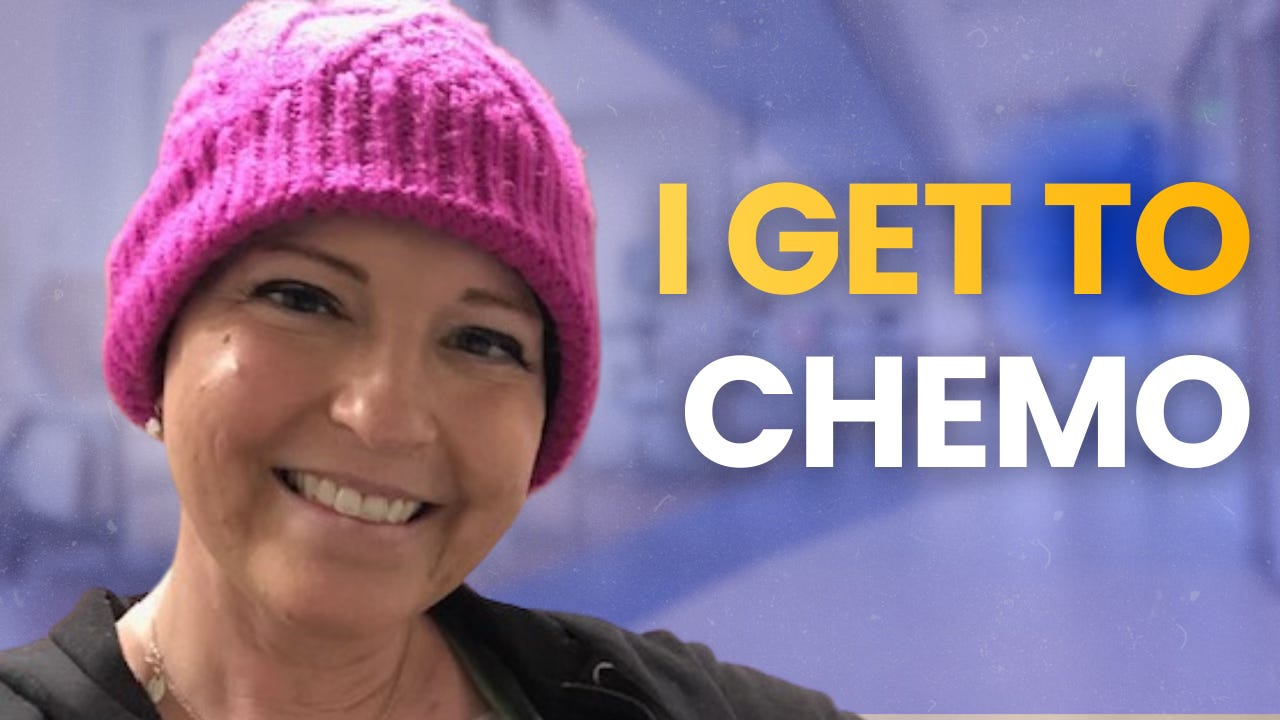
Lesley went on to embrace a profound mental reframe—shifting from “I have to do chemo” to “I get to do chemo.” She found community online, lost her hair, grieved the children she couldn’t have, and emerged transformed. Her husband lost ninety pounds. She changed careers.
But none of that growth would have been possible without the foundation Becky laid in that first hour. When everything else was falling apart, one phone call said: You’re not alone. We’ve got you. This is what happens next.
That’s what every newly diagnosed cancer patient deserves.
Listen to the full episode with Lesley to hear how she built community, transformed her relationship with exercise, and found a mindset that carried her from diagnosis to thriving.
Links for this article:
1. The 22.3% statistic on cancer programs with navigators: “Improving Cancer Care Delivery: Learnings for Oncology Nurses and Patient Navigation From a National Quality Survey” Journal of the Advanced Practitioner in Oncology, 2022 https://pmc.ncbi.nlm.nih.gov/articles/PMC9328452/
2. The Journal of Clinical Oncology randomized trial (psychosocial support, care coordination, 8-month benefit persistence): “Nurse Navigators in Early Cancer Care: A Randomized, Controlled Trial” Journal of Clinical Oncology, 2014 https://pmc.ncbi.nlm.nih.gov/articles/PMC3867643/
3. The meta-analysis (20-day improvement, 13-45% completion rates): “Effects of Nurse Navigators During the Transition from Cancer Screening to the First Treatment Phase: A Systematic Review and Meta-analysis” Asia-Pacific Journal of Oncology Nursing, 2021 https://pubmed.ncbi.nlm.nih.gov/34743002/