

Your chemo’s done. Surgery’s behind you. But you’re still so tired you can barely climb your own stairs.
Your oncologist shrugs. “That’s normal,” they say. Maybe they mention getting more rest. Eating well. Taking it easy.
Meanwhile, you’re wondering if this exhausted version of yourself is permanent.
Dr. Amy Morris knows that feeling intimately. As a cancer pharmacist who specialized in helping patients manage treatment side effects, she thought she understood cancer inside and out. Then a routine ultrasound for heartburn revealed a different reality: ovarian cancer.
“I knew so much going into treatment,” Amy told me. “I had witnessed a lot of people get the exact same treatment. I knew what was gonna happen, and that is scary.”
But here’s what caught her off guard—what catches most of us: the exhaustion. Not tired-after-a-long-day exhaustion. The bone-deep, can’t-function, where-did-my-life-go exhaustion that steals months or years after treatment.
“The exhaustion definitely caught me off guard in terms of how severe it was,” she said. “Because that’s just not living.”
So she did what any scientist would do: she researched the hell out of it. And what she discovered contradicts nearly every piece of well-meaning advice you’ve received about eating during and after treatment.
When you’re sick, you reach for crackers, toast, ginger ale—gentle, bland carbs that feel safe. Amy did the same thing. We all do. It’s what our mothers gave us.
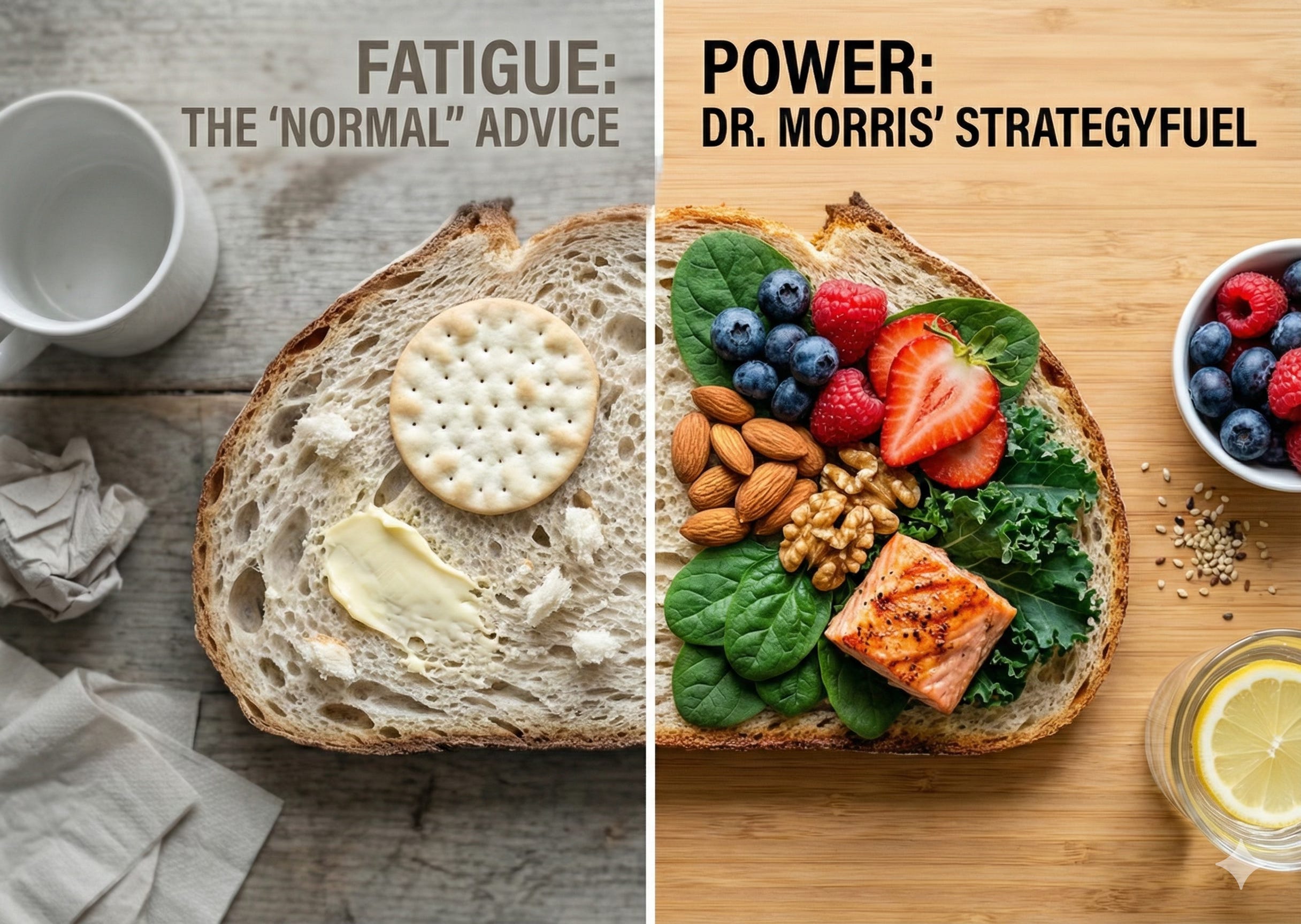
“That’s fine,” Amy explained. “That is just not what your body needs to get rid of this exhaustion.”
Here’s the problem: cancer treatment doesn’t just make you tired. It fundamentally changes how your body processes energy. Your cells are working overtime to repair damage, rebuild tissue, restore function. They need specific fuel in specific amounts.
“This isn’t just like healthy eating,” Amy said. “This is war and this is strategy.”
The difference between eating “healthy” and eating strategically comes down to precision. Not whether you ate organic vegetables or chose whole grains. It’s about hitting specific protein targets, balancing macronutrients in exact ratios, ensuring your body gets the micronutrients it needs.
Most cancer patients never hit those targets. Amy sees it constantly helping women stay cancer-free. “The number one thing by far that I see women make a mistake with is nutrition,” she told me. “And I’m gonna say that, and a lot of listeners are gonna be like, oh, my nutrition’s good. I eat whole foods, I eat organic, I eat mostly clean.”
None of that means you’re fueling recovery.
In our full conversation, Amy breaks down exactly what your body needs, why exercise reduces recurrence risk by 59%, and how to shift from feeling like a cancer patient to living with true freedom.
Watch or Listen now on Apple Podcasts | Spotify | YouTube