
When the Thing You Love Might Be the Thing That Saves You
Valerie David’s story gets under my skin. Here’s the story.

Valerie’s opening the Pink Hulk — her one-woman show about surviving cancer — at a festival in Portland, Oregon. It’s morning, 9:45 Pacific time. Her phone rings. It’s her oncologist in New York, three hours ahead, calling to tell her the chest pains she’d been reporting for months are stage four metastatic breast cancer. The cancer she thought she was done with has spread to her ribcage, her chest, and her legs.
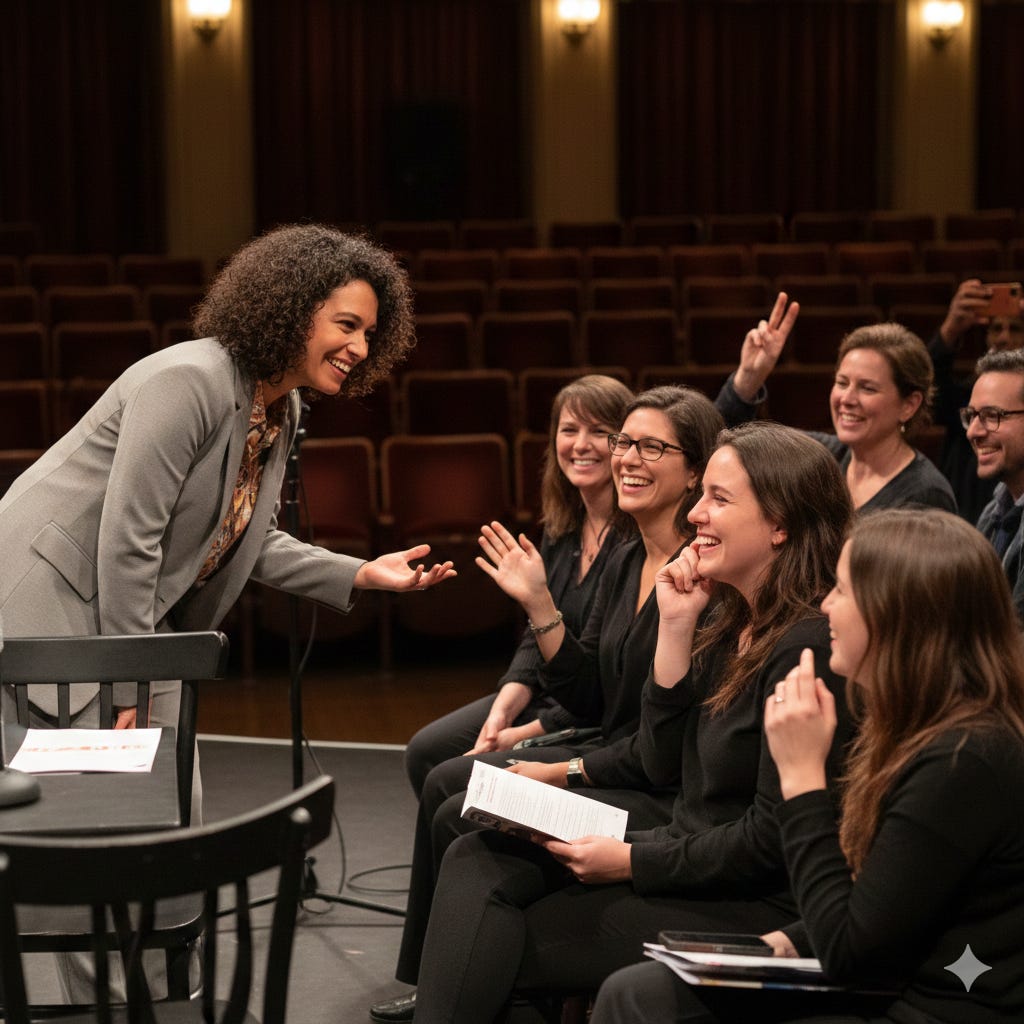
She did the show that night.
Not because she was in denial, and not because she was performing some version of courage for the audience. She did the show because, as she told me, her own show gave her the strength to do it. “I had to be the Pink Hulk,” she said. “And I knew that it wasn’t about me. It was about the audience.”
Seven years later, she has no evidence of disease. For those new to the terminology: NED is not the same as cured. In metastatic breast cancer, there is no cure — what’s possible is that the disease becomes undetectable. And in Valerie’s case, after five months on a targeted drug, her scans showed a 100% response. Fewer than 3% of patients get there.
Did performing through her diagnosis contribute to that outcome? She believes it did. And the science — still emerging, but pointing in a consistent direction — suggests she’s probably not wrong.
What the research says
