When AI Found What Doctors Couldn’t

A little girl—let’s call her Maria—was diagnosed with an autoimmune disease of the liver at age two. Immediately came the biopsies, the hospitalizations, the medications. Three years later, she was significantly worse. Her parents were broke.
Then she ended up with a geneticist using an AI diagnostic platform. The answer came quickly. And the solution? Change her diet. Reduce protein, increase enzymes. Eighteen months later, Maria was thriving.
Her mother’s response: “If I would’ve known this five years ago...”
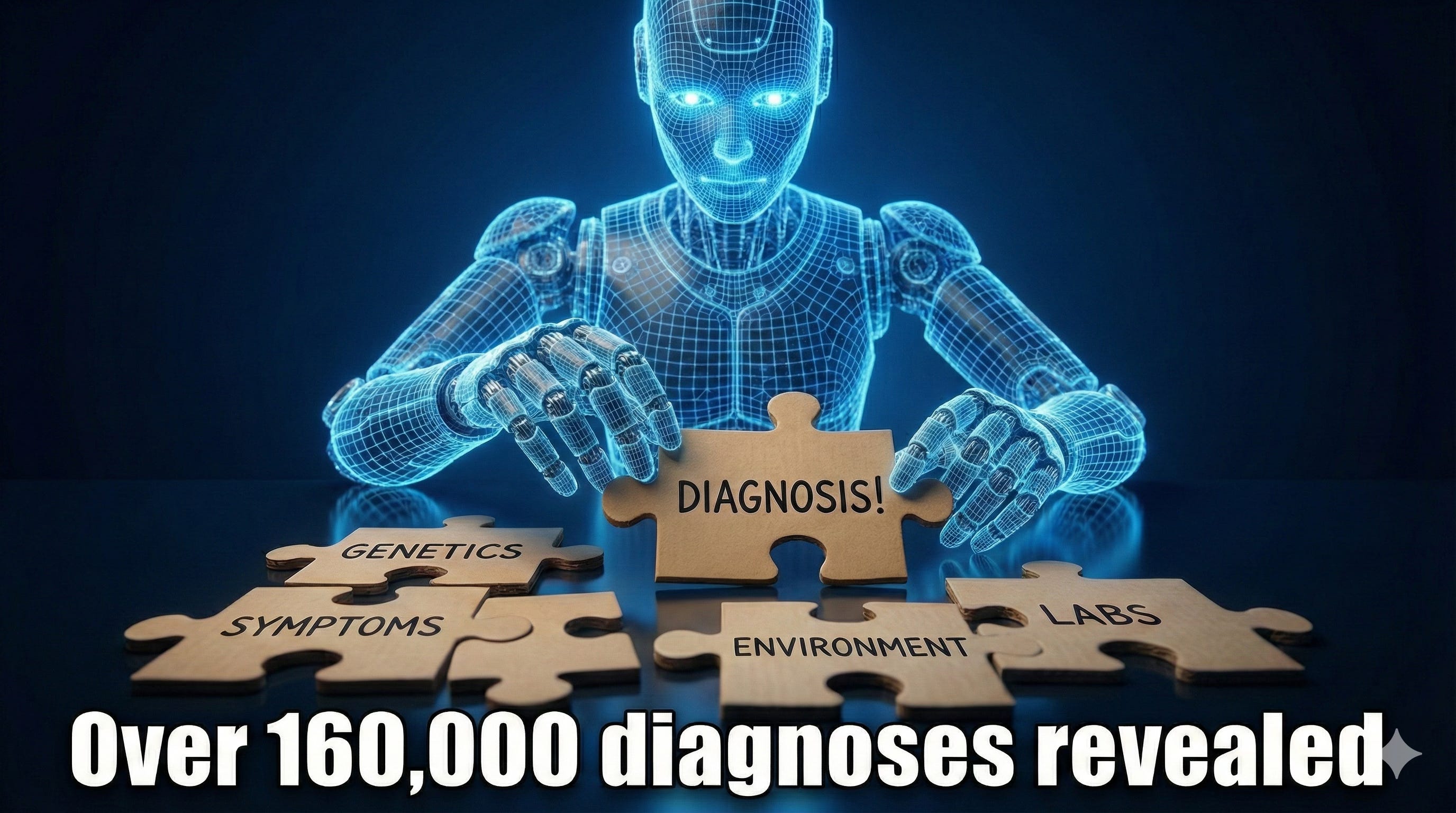
Pete Martinez has spent 12 years building the AI system that helped diagnose Maria. His platform has now assisted with 162,000 patient cases—many of them children with rare genetic diseases, many of them cancers that would otherwise take years to identify.

Here’s what most people don’t understand about AI in medicine: it’s not replacing doctors. It’s giving them access to the collective knowledge of the world’s best specialists—in real time, with trusted data, tailored to your specific combination of symptoms, genetics, and history.
“What we’re doing is amplifying the brain to be a super brain,” Pete told me, “taking a look at the whole human body as an entity, not in very fragmented pieces.”
That fragmentation is exactly why diagnosis takes so long. You see a specialist who only looks at one system. You get referred to another who looks at something else. Meanwhile, nobody’s connecting the dots—and the disease keeps progressing.
Two things you can do right now:
Ask better questions. When your doctor gives you a diagnosis or dismisses a concern, ask: “How did you come up with that?” Pete shared a story of a friend whose doctor Googled the condition right in front of her. She walked out. You deserve someone who can explain their reasoning.
Know when to walk away. If your doctor dismisses your request for genetic screening—especially if you have family history—Pete’s advice is blunt: “Walk away.” A physician who won’t explore your concerns isn’t the right partner for your care.
The average time to diagnose a rare disease is 5-7 years. Five to seven years of wrong treatments, unnecessary procedures, financial devastation, and family stress. AI platforms like the one Pete built are compressing that timeline from years to days.
The technology only works if you advocate for it. If you ask questions. If you push for answers. If you remember that you’re the quarterback of your own care.
In this week’s episode, Pete breaks down the four specific ways AI is transforming cancer diagnosis—from predisposition screening to personalized treatment. He explains why ChatGPT isn’t the answer for medical questions (and what is). And he shares what gives him hope after 12 years of doing this work.