

Tulsi Gabbard resigned last week to be with her husband.
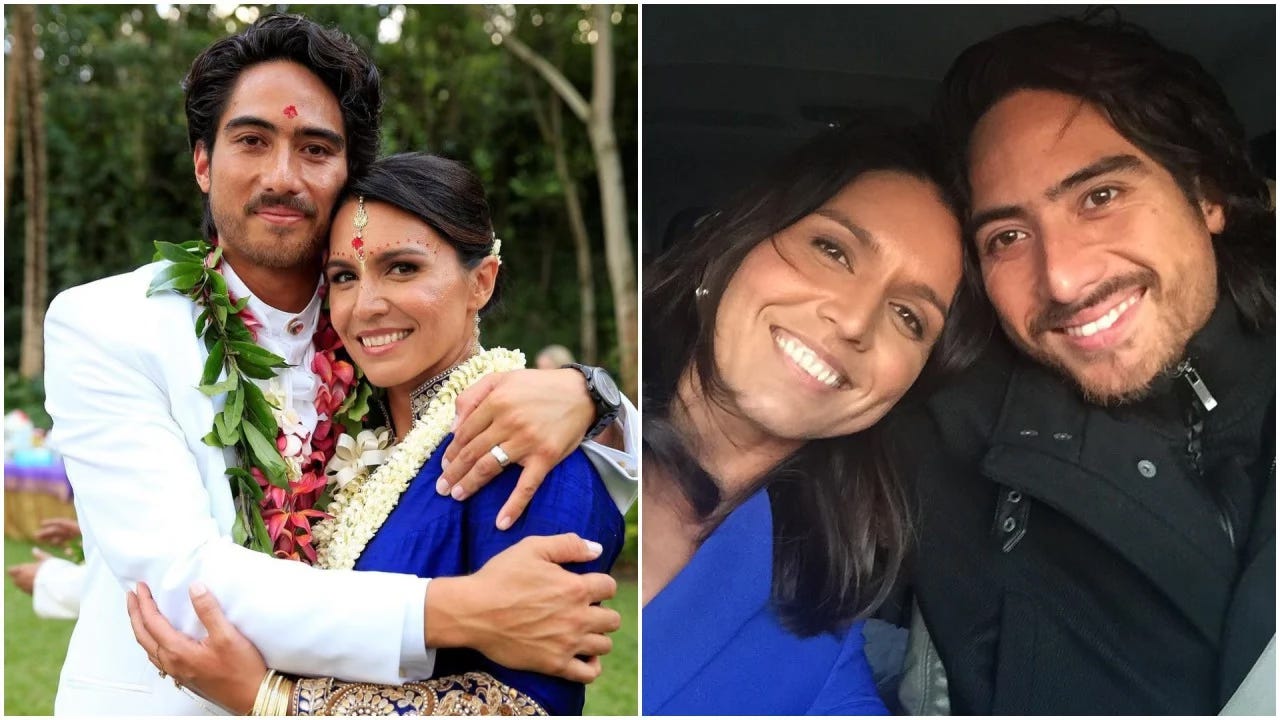
Abraham Williams, 37 years old, was just diagnosed with an extremely rare form of bone cancer. She didn’t share the type, and I’m not going to guess at it. What she did share is that he’s facing the fight of his life, and she needed to focus her time and energy on supporting him - something incompatible with her job as Director of National Intelligence.
Anyone who has loved someone through cancer understands how she felt.
Abraham, to Tulsi, to their family, we are all pulling for you.
But one number triggers me.
Thirty-seven.
The curveball is getting younger
I never got to believe the comforting story — that cancer is something that happens later, to older bodies, with more warning. My family didn’t let me. My mother was diagnosed at 36. My sister was 29. I grew up knowing in my bones that cancer comes for people in the prime of their working lives, and that it does not wait for a convenient decade.
So I did the thing the comforting story lets most people skip: I assumed the worst about my own odds and acted on it years before I had any proof. I changed how I lived. I nursed each of my kids for a full year, partly because I knew it lowered my risk. I didn’t get genetic confirmation until my early 30s after two of my three kids were born, but by then I’d been pushing back for years. I did nearly everything in my power short of a preventive mastectomy. When I finally decided to do that…I was in my 50s, and that’s when I was diagnosed. In my family, that made me the late one. The exception.
I can’t prove that acting early bought me those years. There’s no clean experiment for the cancer you didn’t get in your 30s. But I believe it did. The difference between my timeline and my mother’s and my sister’s wasn’t that I was healthier; it was luck. But the fact that my cancer was found very early and highly treatable - that wasn’t luck. That was vigilance informed by risk assessment.
That’s why a 37-year-old with bone cancer doesn’t land on me as rare bad luck. It lands as a pattern I’ve watched my whole life. Early-onset cancer — diagnosed in adults under 50 — is rising across many cancer types, not just one. People in their thirties and forties are getting diagnoses their grandparents wouldn’t have seen until their seventies, if at all. Abraham is 37. He is not the exception we want him to be.
And for some of those people, the risk was knowable. Not the diagnosis — the risk. The loaded dice they were carrying without ever being told.
What “knowing” actually buys you
I talk about agency constantly in coaching, in this podcast, and in my own treatment. It’s finding the levers that are yours and pulling them hard.
Genetic risk assessment is one of those levers, and most people don’t know it’s sitting right there.
A small but real number of cancers — including some of the rare and aggressive ones — trace back to inherited risk you can identify with a test combined with family history (if known) and a lifestyle inventory. Not a maybe. A known syndrome, a known gene, a known elevated risk.
Take the most studied example in bone cancer. People with a particular inherited syndrome that raises their risk of sarcomas and several other cancers can enroll in a surveillance protocol built specifically for them — annual whole-body MRI, regular imaging, bloodwork, the works. No radiation, because their bodies can’t tolerate it, which the protocol accounts for. And it works. In one analysis, that kind of imaging caught 41 of 46 of this type of bone cancer at an early, treatable stage. Survival improves when you screen the people who need screening.
This is the whole reason I do this work
I don’t know whether anything could have changed Abraham’s path. Neither do you. That’s not the point. The point is the thousands of people walking around right now carrying a risk they’ve never been told about, who could be in a surveillance program tomorrow, whose stage-1 catch is sitting in a test they’ve never taken.
I had that warning. Most people don’t. The WISDOM study tested 46,000 women and found that 30% of those carrying a high-risk gene had no family history of breast cancer at all. A third. Under today’s rules, no one would have offered them the test. They’d have found out the way too many of us did — after they already had cancer.
That’s what makes me want to change the whole system. Knowing your risk shouldn’t depend on having the “right” family history, or the money, or a doctor who happens to think to ask. Every adult should be able to get a genetic risk assessment — comprehensive, private, and free — and everyone who comes back high-risk should be walked straight into the screening and the support that catches things early.
So don’t wait to be told you qualify. Ask about genetic counseling. Ask what risk assessment is available to you. Ask while you’re healthy — that’s when the answer is worth the most.
We can’t stop every curveball. But we are getting better, every year, at seeing them coming. And seeing them coming is how you get to swing.
To Tulsi and Abraham: I wish you the best of luck. I hope the cancer responds to treatment and that you are surrounded by people who bring you joy.
I always ask: What’s your advice for someone who wants to kick cancer’s ass? Mine, today, is this — find out what your risk is, and if you have high risk, be vigilant about the right screening protocol, lifestyle changes, and staying up to date on prevention and detection research.