
The Stage 4 Thriver Who Jet-Skied to Catalina: How Cindee Rewrote the Metastatic Cancer Playbook

What do you do when your doctor tells you that your "clogged milk duct" is Stage 4 metastatic breast cancer?
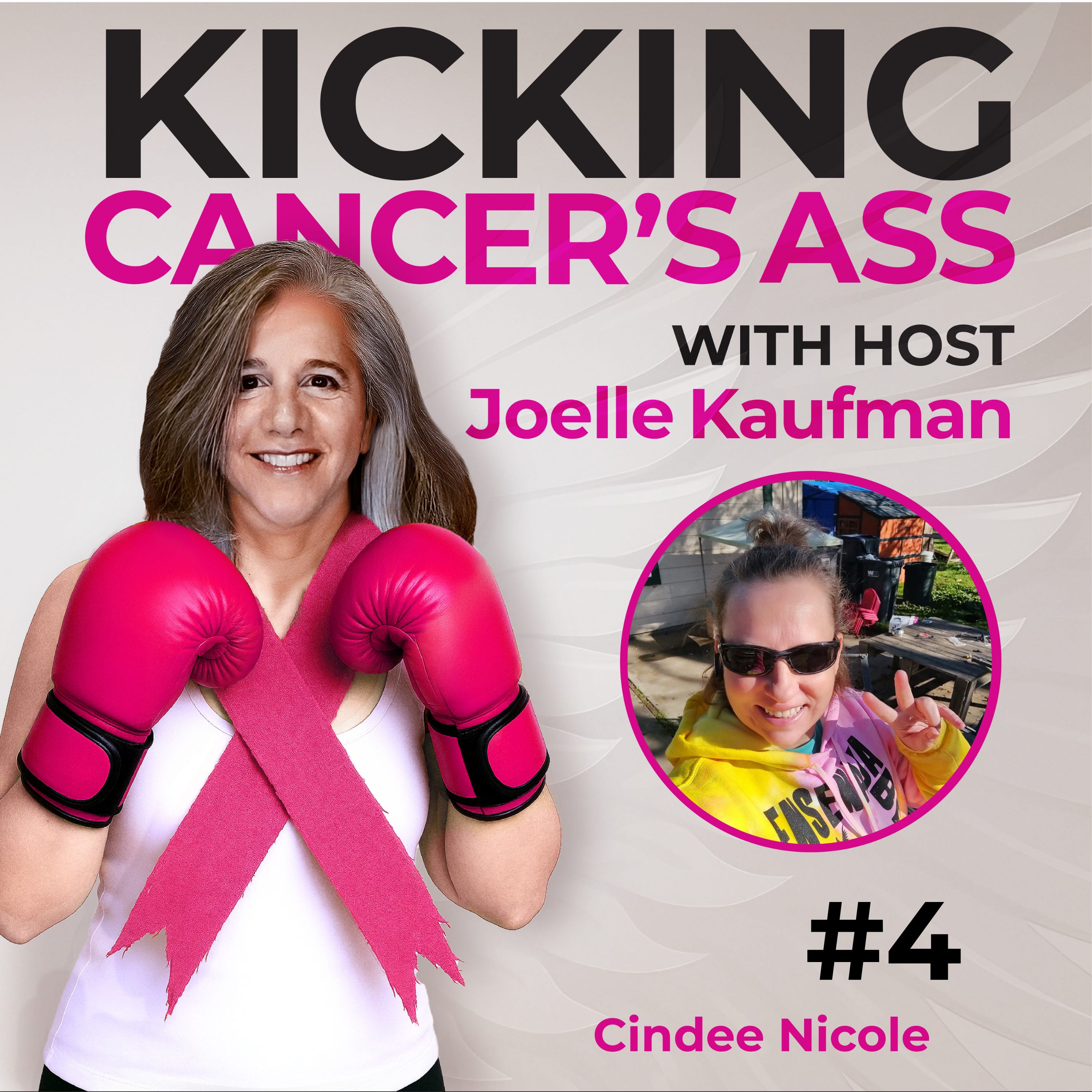
If you're Cindee Nicole, you make an Excel spreadsheet of every place you want to travel, teach your 19-month-old to climb in and out of his crib using a step stool, and start planning the most epic 40th birthday celebration in human history—which includes jet-skiing 60 miles round trip across the Pacific Ocean while battling cellulitis and staph infection.
"I have two options," Cindee told me during our conversation. "I could be sad and not, or I could, we're just gonna freaking go."
This is the story of how a mother of three turned a terminal diagnosis into a travel itinerary and transformed "You have cancer" into "Hold my beer, I'm booking a flight to France."
When "Just a Clogged Milk Duct" Changes Everything
Picture this: You're weaning your third baby, and you notice what feels like a familiar nursing issue. September comes and goes. November arrives, and that "clogged duct" is still there. Your doctor measures it—5.3 centimeters.
For context, that's roughly the size of a lime. In your breast.
"I was freaking out mostly because I didn't have insurance," Cindee recalls. But sometimes the universe has different plans. COVID-19 policies meant she was still covered, which became a lifeline when that lime-sized lump revealed its true nature.
The scans told a story no mother of three wants to hear: cancer had spread to her spine, sternum, and pelvis. Stage 4. Metastatic. The kind of diagnosis that makes oncologists lower their voices and start conversations about "managing" rather than "curing."
Here's where most stories would take a dark turn. Cindee's story? It takes off like a rocket.
The Mastectomy That Led to Graduation
Three days after major surgery, with drains tucked into her pockets and pain medication coursing through her system, Cindee made a choice that would define her entire cancer journey. Her eldest son was graduating from high school, and she would be there.
When her plastic surgeon scheduled a follow-up surgery for the day before graduation, Cindee didn't accept defeat. She advocated. She explained. She made it clear that there was only one graduation, and she had an unspoken goal that suddenly needed to be spoken: she was going to see all three of her children graduate.
"The lady at the front desk who was scheduling it was able to get me in at another hospital," Cindee remembers. "She said her son was graduating from high school also. So she knew."
The image is powerful: a mother with surgical drains, heavily medicated, sitting in those uncomfortable plastic chairs, watching her son receive his diploma because some things matter more than medical convenience.
What strikes me most about this moment isn't the physical determination—it's the mental shift. Cindee had just received a diagnosis that typically comes with time limits, and her response was to start setting long-term goals.
The Mindset That Defied Medical Odds
During COVID-19, cancer treatment became an even lonelier journey. Cindee faced radiation sessions alone, surgeries without support, and appointments where she'd walk up to the desk crying just from saying her name.
"My choice is to be sad or to conquer it," she told me. "So that's what I did."
But here's what makes Cindee's approach revolutionary: she didn't just choose to conquer cancer—she chose to conquer life. When her oncologist said, "We're treating this like diabetes. We're gonna maintain it," something clicked.
Stage 4 metastatic breast cancer became a chronic condition, not a death sentence.
This wasn't denial or toxic positivity. This was strategic reframing backed by medical reality. Cindee understood something many people miss: metastatic doesn't mean terminal anymore. It means ongoing treatment, careful monitoring, and—if you're smart about it—a whole life in between.
The Birthday That Broke All the Rules
For her 40th birthday, Cindee decided to do something that would make most people's insurance companies faint: jet-ski from Long Beach to Catalina Island—30 miles across open ocean each way.
Oh, and she was battling cellulitis and staph infection at the time.
"I told them exactly what I was doing and they're like, 'all right, have fun,'" she laughs, remembering the ER doctors who clearly didn't understand the severity of cellulitis. "Well, yeah, cellulitis is very serious. I probably should have rescheduled my trip, but I didn't."
This wasn't reckless abandon. This was a calculated rebellion. Cindee had learned that her time came with no guarantees, so she was going to pack as much living as possible into every moment she had.
The jet ski adventure included dolphins (her favorite animal), massive sunfish, and what she swears was a shark sighting. Her husband Josh—who had never been on a jet ski before—learned to navigate ocean swells while clinging for dear life.
The message was clear: cancer might set the treatment schedule, but it wasn't setting the life schedule.
The 50-State Mission That United a Family
Somewhere in the chaos of diagnosis and treatment, Cindee had an epiphany: she wanted to take all three of her children to all 50 states. Not someday. Now.
"I don't know why I never liked traveling before, but it was like I was always going to Hawaii or always to the same place. I just decided we're gonna, I wanna take all or my, take my kids to all 50 states."
This isn't wealthy-family-with-unlimited-resources travel. This is strategic, creative, budget-conscious adventure planning. They pick destinations based on the cheapest flights, rent transit vans, stop at roadside attractions like "the US's largest covered wagon," and create memories that range from sacred (touring state capitol buildings) to ridiculous (staying in an Airbnb decorated with five Christmas trees in one bedroom during spring break).
Current count: 17 states down, 33 to go, with a crew that sometimes includes nine people crammed into one RV.
However, what makes this mission extraordinary is that it's not just about checking boxes on a map. It's about teaching her children—ages 5, 10, and 20—that life is meant to be experienced fully, even when (especially when) time feels uncertain.
The France Weekend That Redefined Spontaneous
In August, when the U.S. Women's National Soccer Team made it to the World Cup finals, Cindee posted on Facebook: "Who wants to go to France with me this weekend?"
Most people assumed it was a joke. Cindee was dead serious.
On Wednesday, I put the post up. Thursday, we bought plane tickets to go to France. On Friday, we went to the game and came home Sunday."
This wasn't the result of unlimited wealth—Cindee had just sold a rental property, and her friend was going through a divorce. It was the convergence of opportunity and mindset. When the chance presented itself, they took it.
The deeper lesson? When you're living with metastatic cancer, "maybe next year" isn't a luxury you can afford.
The Chronic Disease Perspective That Changes Everything
Here's what most people don't understand about Stage 4 metastatic breast cancer: it's not an automatic death sentence anymore. Medical advances have transformed many cases into chronic conditions that require ongoing treatment but allow for full, active lives.
Cindee has been on the same medication for four to five years—longer than her medical team expected. Her last scan showed "no evidence of disease." She's not in remission (that's not possible with metastatic cancer), but she's living proof that the stage 4 story is being rewritten in real time.
"I could do all the, do all the things. It's a lot. But I think the more education that's out there and the more knowledge... the more you know, I think the better."
This perspective transforms everything. Instead of planning a funeral, Cindee planned adventures. Instead of preparing for death, she prepared for living.
The Wisdom That Only Comes from the Edge
When people reach out to Cindee after receiving their own Stage 4 diagnosis, her advice is beautifully practical:
"You're literally at the worst point... there's just so much unknown. A lot of times you don't even have like a date for a surgery or treatment or even know what the heck your treatment is gonna be... It's okay, take it day by day."
But then comes the crucial part:
"If you need to stay in bed and cry all day, go in and do that. But then you need to like work on your mindset."
This isn't about denying the reality of cancer—it's about refusing to let cancer define the reality of your life.
Cindee's approach includes brutal honesty with perspective. When she sees people in cancer groups complaining about taking medication for three years, she gently reminds them: "I wish I only had to take them for three years." It's not criticism—it's context. And context, she's learned, is everything.
The Ripple Effect: Teaching Kids to Live Boldly
Perhaps the most powerful part of Cindee's story isn't what she's taught herself—it's what she's teaching her children. At first, she worried she was traumatizing them by having cancer, sending them to Camp Kesem (for children who have a parent with cancer), disrupting their normal childhood.
"I've switched it and I think they see that life is really that gift... I hope one day they're gonna be like, 'mom was right, mom was right.' And I hope I'm here to see it and hear it out of their mouth, and I'm gonna be like, 'I told you so.'"
Her children are learning to navigate state capitols and Christmas-themed Airbnbs with equal enthusiasm. They're discovering that Iowa exists (even if they can't understand why anyone lives there), that adventure is always within reach, and that their mother is someone who books flights to France on a Wednesday for a weekend soccer game.
These aren't just family vacations—they're masterclasses in seizing life.
The Question That Changes Everything
During our conversation, I asked Cindee what "kicking cancer's ass" means to her personally. Her answer was simple and profound:
"I think it means to live your best life and literally kick cancer's ass."
She owns hats and sweatshirts that say "badass," and she's claimed that identity completely. Not because cancer made her tough—but because cancer revealed how tough she already was.
Here's what I want you to consider: What would change in your life if you adopted Cindee's approach to uncertainty? What would you do differently if you stopped waiting for "someday" and started planning for "this weekend"?
Cindee has an Excel spreadsheet of travel destinations and trips planned through 2031, including the Women's World Cup in the United States. She plays soccer three to four days a week despite medications that make it harder to get in shape. She's teaching her 5-year-old that life is a gift while planning to see his high school graduation in 13 years.
The Future According to a Stage 4 Thriver
As we wrapped up our conversation, Cindee was excited about an upcoming cruise to the Eastern Caribbean and the continuing quest to hit all 50 states. When people ask her how she can plan trips so far in advance with a metastatic cancer diagnosis, her response is perfect:
"I'm like, 'cause I'm gonna freaking go on it... If I'm just sitting here waiting for something to go wrong, geez, I might be here for a minute."
Cindee’s Rapid Responses
What do you tell someone newly diagnosed with Stage 4? "You're literally at the worst point... It's okay, take it one day at a time. If you need to stay in bed and cry all day, do that. But then you need to work on your mindset."
What does kicking cancer's ass mean to you? "I think it means to live your best life and kick cancer's ass."
How do you stay so positive? "I have two options. I could be sad and not, or I could, we're just gonna freaking go."
What's your approach to the future with metastatic cancer? "My stuff could change. Everything could change at a moment's notice, and I just hope everybody... You never know what could change."
What's the most important thing cancer taught you? (Implied from her "slap in the face" comment) "I think we just get into a routine... You don't think about it... so that means I got a lot of stuff to do."
And that might be the most important lesson of all.
Cindee Nicole didn't just survive Stage 4 metastatic breast cancer—she used it as a catalyst to live more fully than most people ever do. She jet-skied across oceans, flew to France for weekend soccer games, and turned a terminal diagnosis into a travel itinerary.
But more than that, she redefined what "fighting cancer" looks like. It's not just about treatment protocols and scan results. It's about choosing joy over fear, adventure over safety, and "let's go" over "maybe someday."
Cancer gave Cindee a wake-up call she didn't know she needed. The question is: do you need cancer to give you yours, or can you learn from her example and start living like you mean it right now?
What's your version of jet-skiing to Catalina? What adventure are you putting off until "someday"? Hit reply and tell me—because if Cindee's story teaches us anything, it's that someday might need to become this weekend.
Found this inspiring? Share it with someone who needs to know that a challenging diagnosis doesn't have to mean the end of adventure—sometimes it's just the beginning of really living.