
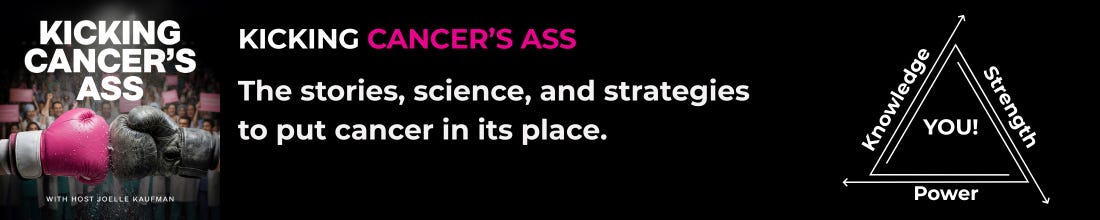

A hematology/oncology fellowship is 36 months. Roughly 8,000 hours of training. A 2024 national survey of every fellowship program in the United States found that fewer than half — 49% — offered any formal instruction on patient sexual health. When it existed, it typically amounted to less than an hour.
One hour out of 8,000. That’s 0.01% of a doctor’s training dedicated to a side effect that will affect up to 90% of their female patients and up to 85% of their male patients.
How does that gap not close itself? Why does a medical system that performs nerve-sparing robotic surgery with extraordinary precision not require a single hour of training on what to say to the patient afterward about their sex lives?
The study’s authors, led by Jennifer Barsky Reese at Fox Chase Cancer Center, found that most programs relied on clinical exposure rather than formal instruction — fellows learn by watching practicing oncologists.
But most practicing oncologists don’t raise the subject (sex) either, often because of their own lack of training.
As the researchers noted, fellows whose training consists of watching clinicians who don’t discuss sexual health are essentially learning how not to have the conversation. The silence replicates itself.
And patients feel it. Only 5.4% of cancer patients in a 2024 survey said their healthcare provider initiated a discussion about sexual health before treatment. A separate study found 87% of patients reported treatment changed their sexual function, but only 27.9% were ever formally asked about it.
Three men on this week’s episode of Kicking Cancer’s Ass lived inside that silence — and each one paid for it differently.
Mike Prescott told his surgeon before his prostatectomy that his sex life with his wife, Shirley, mattered. The surgeon listened, performed nerve-sparing surgery, and told him recovery could take 18 to 24 months. But nobody talked about the gap between surgery and recovery. Three weeks post-op, unable to control his bladder, convinced he’d never be intimate with Shirley again, Mike found himself beside oncoming traffic with thoughts he couldn’t shake. His physical therapist — not his surgical team — eventually handed him information about a vacuum erection device. When Mike called his doctor’s office to ask why nobody had mentioned it, he learned they’d had it available for 15 years. That device didn’t just help Mike recover sexually. He says it may have saved his life.
The clinical evidence backs up what Mike’s physical therapist knew. Vacuum erection devices are well-established, non-invasive tools for penile rehabilitation after prostatectomy — they increase blood flow and oxygenation to tissue that would otherwise atrophy during the recovery window. Erectile dysfunction after radical prostatectomy affects anywhere from 14% to 89% of patients, and nerve recovery can take up to two years. Surveys show 86 to 87% of urologists say they use penile rehabilitation protocols. The tools exist. The knowledge exists. They just aren’t reaching men when they need them most.
Tim Baker’s experience shows what the gap costs over time. Diagnosed at 50 with metastatic prostate cancer that had already spread to bone, Tim was started on hormone therapy that shut down his libido and erectile function almost immediately. Nobody offered Viagra, a vacuum pump, or intracavernosal injections — all options Tim later discovered through his own research. Without guidance on maintaining intimacy, his marriage ended. He describes hormone therapy as feeling like some essential part of himself was being drained away. Tim has now outlived his prognosis by years, and he’s dating again in his 60s — but that marriage didn’t have to end the way it did.
Daniel Garza’s story adds a dimension that most oncology training programs never touch. As a gay man, Daniel’s sexual identity was tied to a specific physical experience. Anal cancer and a subsequent ostomy didn’t just affect function — they dismantled how he understood himself as an intimate partner. He and his partner, Christian, were four days from their third anniversary at diagnosis. No one on Daniel’s treatment team asked how cancer would change his sexual life with his partner or helped them think about what intimacy could look like after. Daniel describes spending years wondering if he was enough for Christian, whether he should walk away for Christian’s sake. They’re still together, 14 years in, but that journey didn’t need to be so solitary.
There’s also a gender gap layered on top of the silence. One study estimated 80% of prostate cancer patients received some information about sexual dysfunction, compared with only 33% of breast cancer patients. That doesn’t mean men are well-served — Mike, Tim, and Daniel make that clear — but it means women are even less likely to get the conversation. And when I went through my own cancer treatment, the full extent of my sexual health guidance was: use condoms with your husband. We’ve been married since 1998. I have no ovaries. When I was finally nudged to ask why to use condoms, I learned it was to prevent pregnancy. A situation that was clinically impossible. That was my cancer and sexual health conversation.
So what changes this? Training and shining a light on the gap.
If fewer than half of oncology fellowship programs teach sexual health, that’s not a gap in individual doctors — it’s a structural decision to treat sexual function as optional.
One hour out of 8,000 is not an oversight. It’s a message: this doesn’t matter enough to teach. That needs to change, and patients and advocates should be pushing medical schools and residency programs to make sexual health a required part of oncology training, not an afterthought.
Asking changes it. If you’re facing cancer treatment — or any medical procedure that could affect sexual function — ask your doctor before treatment starts: how will this affect my sex life, and what are my options?
Ask your doctor before treatment starts: how will this affect my sex life, and what are my options?
Men should ask about vacuum erection devices, PDE5 inhibitors, and intracavernosal injections. Both men and women can ask for a referral to a pelvic floor physical therapist. Don’t assume your doctor will bring it up. The data says there’s a 94.6% chance they won’t.
And if you’re a partner, know that the shift from lover to caregiver is one of the hardest transitions in cancer — and one of the least supported. Daniel and Christian navigated it alone. Tim and his wife didn’t survive it. Mike and Shirley made it through because they both insisted their intimate life wasn’t negotiable. Couples counseling with someone who works with cancer patients isn’t a luxury. It’s a practical tool.
Nobody should have to overhear nurses discussing their own castration before anyone talks to them about what treatment will do to their body. Nobody should discover a device that could save their life from a piece of paper their physical therapist hands them as an afterthought. And nobody should be walking beside oncoming traffic because the medical system that saved their life forgot they were a whole person.
5.4%. We can do better than that.
Sources:
Reese et al., “Hematology and Oncology Fellow Education About Sexual and Reproductive Health: A Survey of Program Directors in the United States.” JCO Oncology Practice, 2024; 20(6):852-860. https://ascopubs.org/doi/10.1200/OP.23.00499
ASCO Educational Book, “Sexuality After Cancer as an Unmet Need: Addressing Disparities, Achieving Equality.” (87%/27.9% statistic, gender gap data) https://ascopubs.org/doi/10.1200/EDBK_100032
Agrawal et al., “Enhancing Sexual Health for Cancer Survivors.” ASCO Educational Book, 2025; 45(3). (90% female / 40-85% male prevalence data) https://ascopubs.org/doi/10.1200/EDBK-25-472856
AUA News, “Penile Rehabilitation 2024: Where Are We?” (86-87% of urologists using rehabilitation protocols) https://www.auanews.net/issues/articles/2024/august-2024/aua2024-recaps-penile-rehabilitation-2024-where-are-we
Oncology News Central, “Sexual Health of Female Cancer Survivors Goes Largely Ignored, Experts Say.” Feb 2026. (5.4% provider-initiated conversation; fewer than half of fellowships training data) https://www.oncologynewscentral.com/oncology/sexual-health-of-female-cancer-survivors-goes-largely-ignored-experts-say
PMC, “The Use of Vacuum Erection Devices in Erectile Dysfunction After Radical Prostatectomy.” (14-89% ED rate, VED efficacy evidence) https://pmc.ncbi.nlm.nih.gov/articles/PMC3784970/
New episode of Kicking Cancer’s Ass. Apple | Spotify | YouTube