
The People Who Hate the Name of My Show Have a Point
What I actually mean when I say "kick cancer's ass."

A while back, a whole conversation broke out online about how much people hate the way we talk about cancer. The warrior language. Be strong. Stay positive. Fight. Kick cancer’s ass. The argument was simple, and it landed on me: if beating cancer is a battle you win or lose, then everyone who dies of cancer died because they lost. They didn’t fight hard enough. They weren’t strong enough. As if a stage four diagnosis were a verdict on your character.
I host a show called Kicking Cancer’s Ass. And I think they have a point.
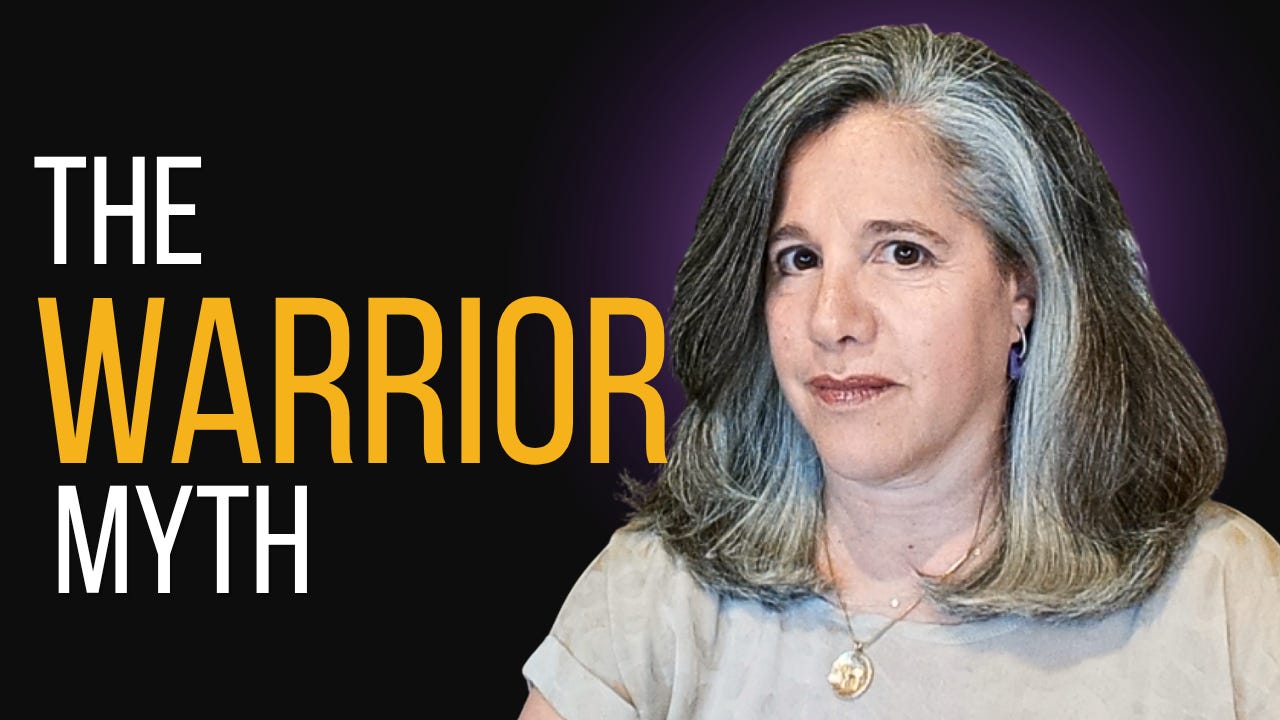
The win-lose version of this is cruel. It turns the sickest people into failures. It tells a woman with metastatic breast cancer that she’s letting everyone down by not being upbeat enough on the days she can’t lift her head off the pillow. I’ve watched people apologize for being tired. For being scared. That framing did that.
So here’s what I actually mean when I say kick cancer’s ass, because it’s almost the opposite of what those critics think.
“It has nothing to do with winning. You can kick cancer’s ass and still die of cancer. I’ve sat across from people who are doing exactly that, living with disease that isn’t going anywhere, and to my eye they are kicking its ass every single day.”
Redefining Authorship
Cancer reaches for the pen. It wants to be the only author of what happens next: how you spend your time, who you are, what your days feel like, how afraid you’re allowed to be. Kicking cancer’s ass is deciding, as much as you can, what role this thing gets to play in your life, and how you’re going to respond to it. It’s refusing to be nothing but a passenger in something that’s happening to you.
That’s the whole of it. Not the outcome. The authorship. The outcome often isn’t yours to choose. The response always is.
I didn’t arrive at that in the abstract. In January 2023, the day before a surgery meant to lower my odds of ever getting cancer, my surgeon called: the scan had come back malignant. The surgery to prevent cancer was off, because I already had it. I carry a BRCA1 mutation. My mother was diagnosed at thirty-six, my sister Tracey at twenty-nine, nine others in my family as well over time. I’d spent twenty years getting screened every six months, trying to time that surgery around my life, and I timed it wrong by about five years.
At my first oncology appointment, I was vibrating and focused. Not shaking. Vibrating. And in that room I decided this would be a project. I named it, my cancer obliteration project, and by the second round of chemo I had a spreadsheet to track side effects, medication, and mood.
Here’s where I have to be careful, because this is exactly where the toxic version sneaks back in. My spreadsheet did not cure my cancer. Twelve rounds of chemo and a team of doctors at the cutting edge did the medical work. Three weeks before my rescheduled surgery, my scans came back clinically complete. My oncologist said, whatever you’ve been doing, keep doing it. And I’d love to tell you I earned that with my attitude. I didn’t. Plenty of people do everything I did and don’t get that call. If your story turns out different than mine, it’s not because you wanted it less.
What the spreadsheet did was smaller and more important. It kept the pen in my hand. On the days I was frustrated, I still got to decide what would happen in the next 10 minutes. That was mine. Cancer didn’t get it.
Taking Control of the Tone
Part of chemo is a port in your chest. Mine was a daily reminder of the five years I’d waited too long, so a friend renamed it. VoldaPort. The port that shall not be named. I introduced every new nurse and medical assistant to VoldaPort. They laughed every time. And I thanked them at the start of the appointment rather than at the end. By round six, they were taking care of me before I asked. None of that was fighting. That was me deciding the tone of my own treatment.
I built this show because everything that would have helped me on day one was scattered across a thousand moments that most people, thankfully, only have one or two of, but in a family like mine, you have enough to see patterns. In the first fifty-two conversations we’ve released with Kicking Cancer’s Ass, I close every one with the same question: what’s your advice for someone who wants to kick cancer’s ass? None of them answer with fighting. If the name meant what the critics think, every answer would be about being a warrior. They almost never are.
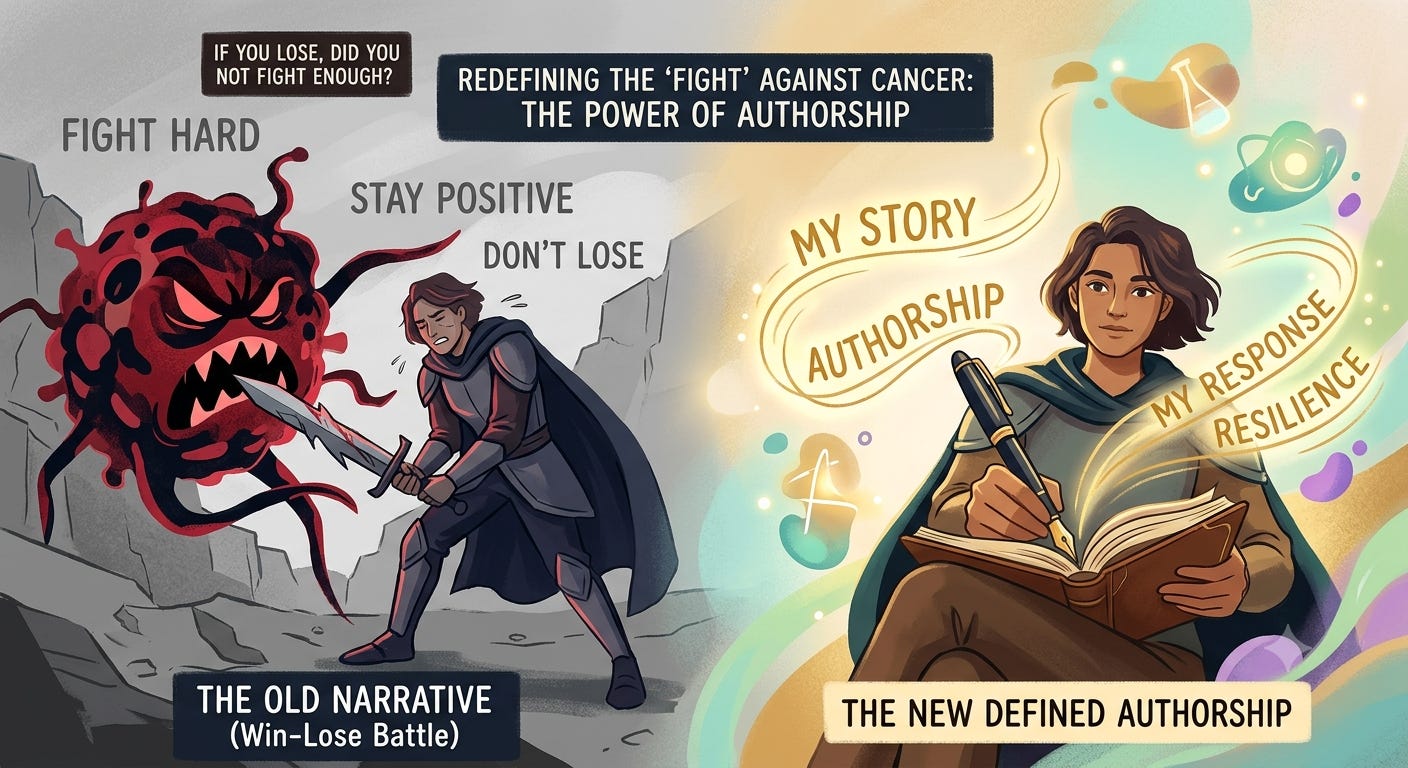
“One guest told me to make sure I was kicking in the right places, that managing a disease is sometimes wiser than trying to destroy it. Another told me the strongest move can be to become the soft person and let people take care of you. Another told me it’s very hard to be afraid while you’re laughing. None of those are war. Everyone is authorship.”
Hope as Data
This is a genuinely different moment to get cancer than the one my mother walked into at thirty-six. I’m alive in part because I knew I carried BRCA1, information her generation didn’t have. This past year, I’ve sat with scientists working on earlier detection, therapies targeted to the biology of a specific tumor, and immunotherapy that teaches your own body to do the work. Things that were science fiction when my family started losing people are now standard of care. People still die, and my family knows that better than most, but hope isn’t a poster on a hospital wall anymore. Increasingly, it’s data. Even the horrible killer, pancreatic cancer, is having a moment where detection could be much earlier, treatment more effective, and survival more possible. Which raises the stakes on everything else: taking hold of your role, asking the questions, and finding the team at the edge of what’s possible matter more now, not less. There’s more on the other side of it to reach for than there has ever been, at least in countries where cutting-edge screening, detection, and treatment are available. There is a long way to go on access and affordability, but the possibilities are there.
Kicking cancer’s ass was never about winning. It was never about being a warrior, or relentlessly positive, or strong enough to deserve a good scan. It’s about not disappearing inside your own diagnosis. It’s deciding who you’re going to be while this happens to you, what role you’ll let it have, and how you’ll respond. On the good days and the hard ones.
That part is yours. Whatever the scan says. And nobody- not cancer, not your worst day- gets to take the pen out of your hand unless you hand it to them.
That’s the whole show. That’s why I keep doing it.