
The Part of Cancer Nobody Prepares You For
Your treatment ended, but your health didn’t. Here is your roadmap for reclaiming your energy.

The day you finish treatment is the best appointment you will ever have. The relief is enormous. The elation is real. You ring the bell, your people cheer, and you exhale for what feels like the first time in months.
What nobody tells you is what comes after. Often within the same week, the structure that held your life together for months simply ends. No more infusions on the calendar. No more nurses who know your name. Just a version of “good job, you’re cured, good luck,” and a door that closes behind you.
Get the episode here: Spotify | Apple | YouTube | Everywhere
Then the fatigue doesn’t lift. Your hips ache at night on a pill you’ll take for five years. You sleep badly, or too much. You go back to your oncologist, and the answer, more or less, is to rest and give it time.
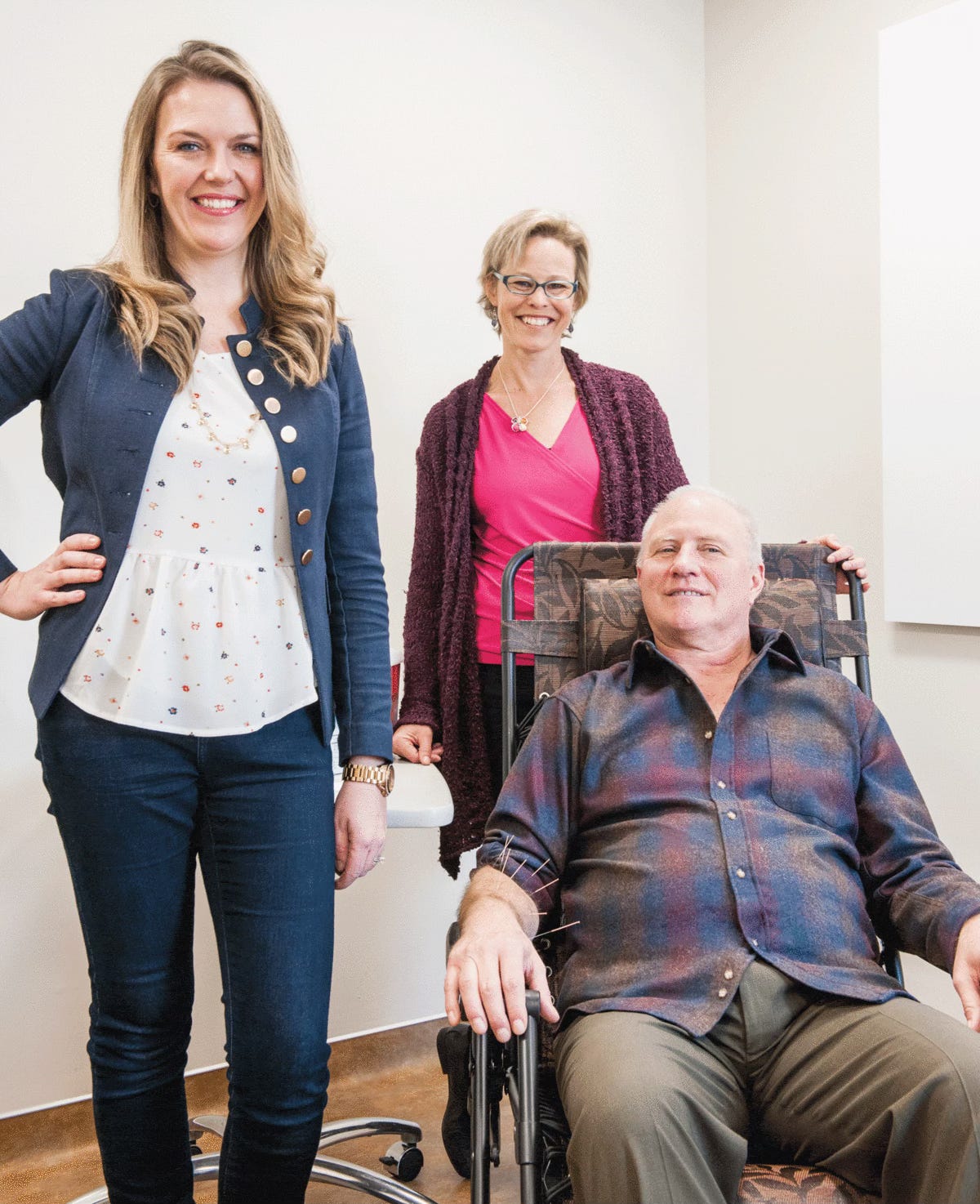
Dr. Jessa Landmann has built her career on the conviction that this is precisely the wrong answer.
A Proactive Approach to Recovery
Jessa is a naturopathic doctor who specializes in integrative oncology, and her work lives in the territory conventional care rushes past: what happens to the body after the cancer is gone.
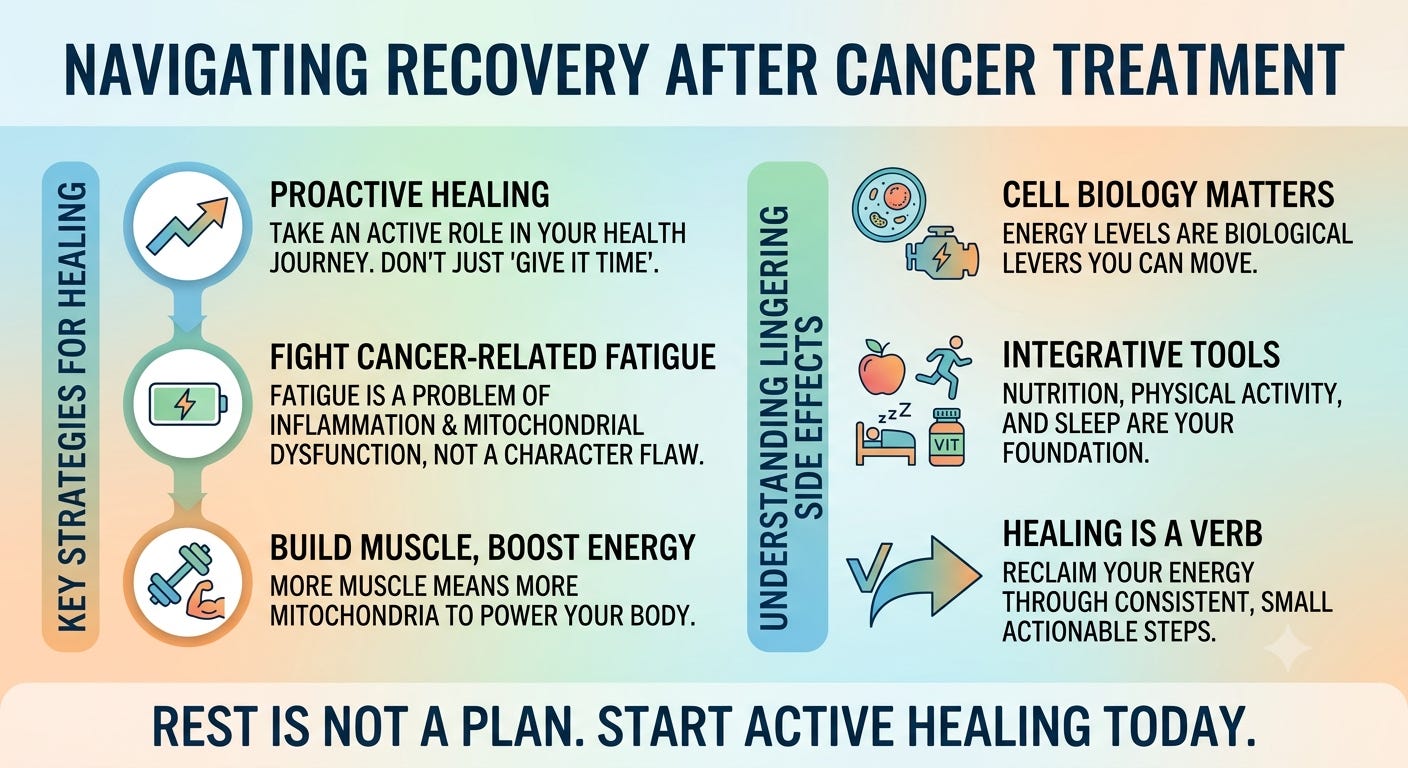
“Healing is a proactive process. It’s not a passive process. If someone said just rest and just give it time, that’s actually probably not very good advice.”
Understanding Cancer-Related Fatigue
Start with the fatigue, because it follows survivors furthest past the finish line. Most people assume exhaustion means their body is weak or they aren’t trying hard enough. It isn’t, and they are. Cancer-related fatigue is increasingly understood as a problem of inflammation and mitochondrial dysfunction.
Mitochondria are the engines inside your cells; chemotherapy damages them and leaves the body inflamed, and the result is an energy system running at a deficit long after the last infusion. That’s not a character flaw. It’s cell biology. Which means the levers that move it are biological too: what you eat, how you move, how you sleep.
The Power of Movement and Nutrition
This is where Jessa’s head-to-toe approach begins, and the order surprises people. Nutrition comes first, then physical activity, then sleep, though she’s quick to say it isn’t a strict ranking. The movement piece connects to something Dr. Jay Harness walked us through earlier in the series. Exercise is not just good for mood. A landmark 2025 trial called CHALLENGE found a structured exercise program cut the risk of recurrence by 28% and death by 37% in colon cancer survivors. More muscle means more mitochondria, Jessa points out, which means more energy. The thing that feels impossible when you’re exhausted is also one of the most powerful tools you have.
Integrative Tools: Vitamin C and Acupuncture
Some tools start during treatment and continue to work well into recovery. Jessa is precise about high-dose IV vitamin C, and so was Dr. Lise Alschuler when she was on the show. They agree completely, which is worth saying out loud, because the internet is a mess on this. Oral vitamin C and high-dose intravenous vitamin C are not the same drug.
At the very high doses delivered via IV, vitamin C ceases to act as an antioxidant and becomes an oxidant, generating hydrogen peroxide, which is toxic to cancer cells. In 2025, the first meta-analysis of intravenous vitamin C found it associated with significantly longer overall survival. For survivors, the part that matters most is inflammation, which Jessa calls the root of most lingering side effects. Research on people receiving chemotherapy has linked IV vitamin C to less fatigue and nausea, better sleep, and improved quality of life, with relief persisting after treatment. “It’s not vitamin C or bust,” she said. It’s one tool among many.
Acupuncture is another, and it carries an endorsement that surprises skeptics. The Society for Integrative Oncology and the American Society of Clinical Oncology recommend acupuncture for the joint pain caused by aromatase inhibitors, the hormone drugs many breast cancer survivors take for years after treatment ends. This matters beyond comfort. Up to half of women stop taking these drugs early, often because of that pain, and stopping early is linked to higher recurrence. Managing the side effect protects the survivor.
Putting Philosophy into Practice
So what does this look like when it works? Jessa told me about a patient three months out of chemotherapy: joint pain, fatigue, constipation, sleeping badly, energy around a five out of ten. The woman ate almost nothing during the day, then a full dinner at nine at night while driving her teenage boys to baseball. Jessa didn’t add a supplement. She moved the meals to breakfast and lunch and got her off the late dinners. Sleep improved because the body wasn’t digesting at midnight. Digestion normalized. Energy climbed to an eight. Then they added acupuncture for the Tamoxifen joint pain, and that held too. One ordinary change, then another. No heroics.
That’s the whole philosophy in miniature. “If we’re on top of the side effects and trying to prevent them from even happening,” Jessa said, “then by the end you can just move on. Otherwise you’re playing catch-up.”
I got through my own Stage 2A treatment by staying ahead of everything I could, and my doctors kept telling me I was doing it differently. The reason to listen isn’t my story. It’s that Jessa has turned what I reached for by instinct into something teachable, backed by research.
The end of treatment is not a finish line you coast past. It’s the start of the phase you have the most control over. Rest is not a plan. Healing is a verb.
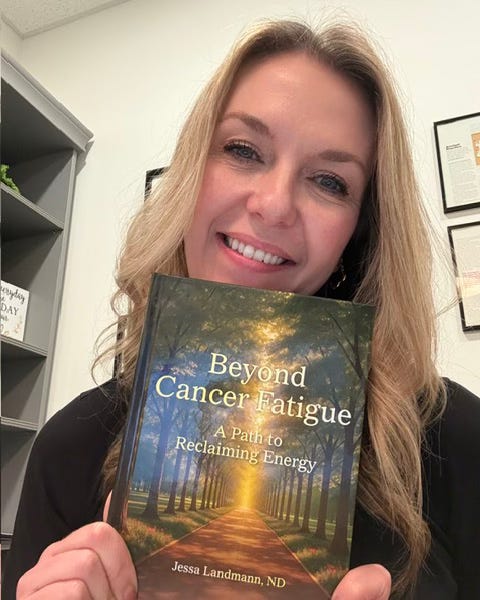
Dr. Jessa Landmann’s book, Beyond Cancer Fatigue: A Path to Reclaiming Energy, was published by Wiley in April 2026.
Get the episode here: Spotify | Apple | YouTube | Everywhere