
The Mindset Shift That Makes Cancer Less Scary

Picture this: You’re in a classroom full of teenagers. They’re taking a test, the room is finally quiet, and you’re doing what you always do—watching them, managing a thousand tiny details at once.
Then your watch buzzes.
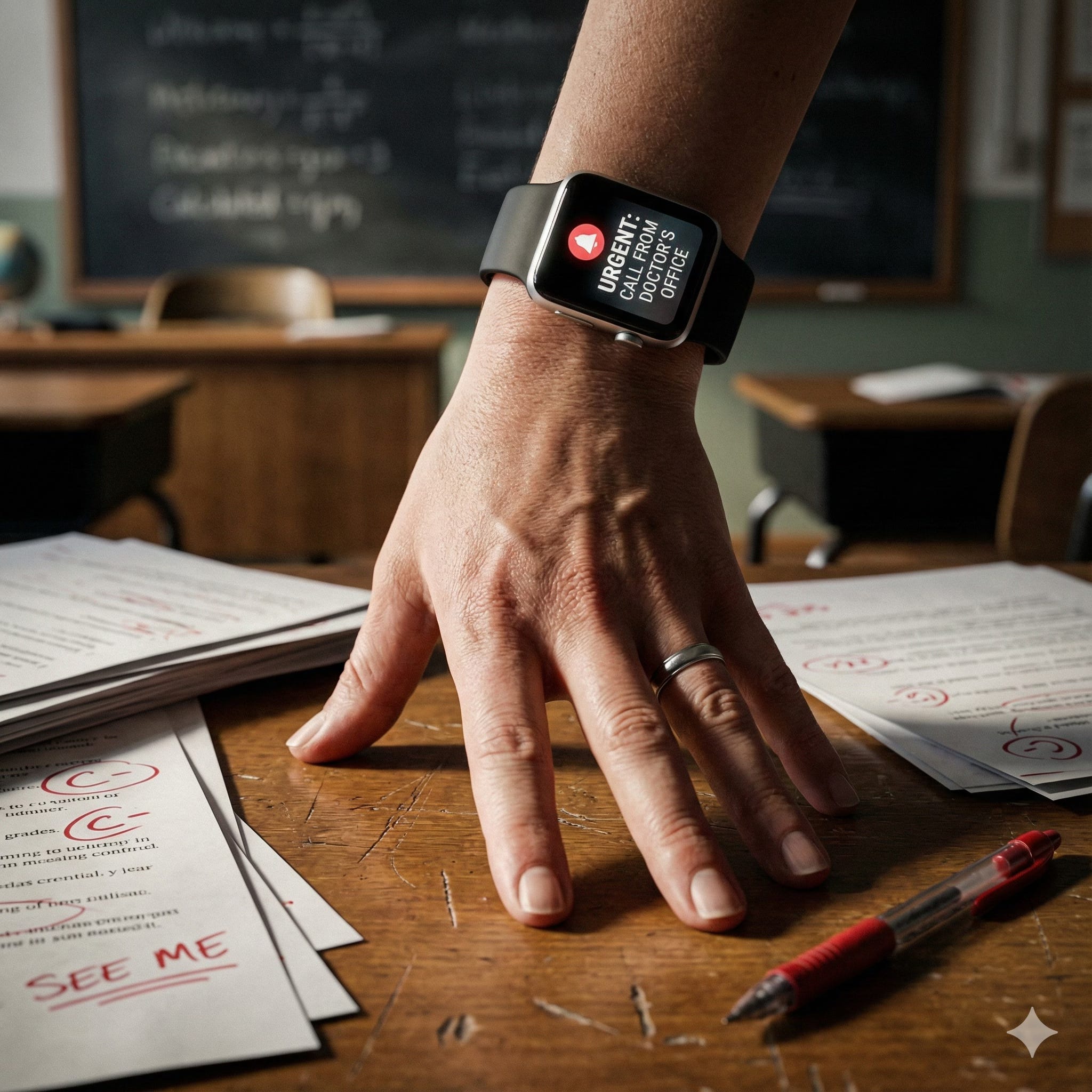
It’s a MyChart notification. You already know they’ve started pushing test results directly to patients. You even liked the idea. “Why wait for the doctor to call?” you told yourself.
You scroll on your laptop with shaking hands while your student teacher runs the room like a pro. You see a phrase you don’t understand—“invasive ductal carcinoma”—so you copy and paste it into Google.
“The most common form of breast cancer.”
In that moment, everything you knew about your life—your plans for another baby, your job, your body, your future—falls straight through the floor. You walk next door, catch your colleague’s eye, and collapse in the hallway screaming your two-and-a-half-year-old daughter’s name.
That’s where most stories stop and say, “And then I became a warrior.”
Lesley didn’t feel like a warrior. She felt like a mother who might be dying on a school hallway floor.
Here’s what changed everything:
That same day, lying in bed after the diagnosis call, she told her husband, “I am so lucky to be here.” Not “Why me?” Not “This isn’t fair.” Just: “I’m alive. I get to treat this.”
From there, she shifted from “I have to do chemo” to “I get to do chemo.” Not because treatment was easy—it wasn’t. She shaved her head, lost her eyebrows and eyelashes, and grieved the body and future she thought she’d have. But that sentence became her anchor.
Two things you can use immediately:
Borrow her sentence. You don’t have to feel grateful to say, “I’m so lucky to be here.” Say it anyway. Fake it until your nervous system catches up. That repetition can be the difference between feeling hunted by treatment and feeling like you’re hunting the cancer.
Name your support squad out loud. Lesley didn’t get through that hallway alone. Her student teacher, her “teacher sisters,” and then her nurse navigator, Becky, all stepped in. Write down who’s actually on your team—medical, personal, online. When your brain says, “I’m alone,” you’ll have proof it’s lying.
But here’s the part nobody tells you: treatment ended, the scans improved, and cancer still didn’t feel “over.”
How do you build a life where grief and gratitude sit side by side, where you’re still on hormone therapy, still getting scanned, and still choosing to say, “I get to be here”?
What would change if you stopped asking, “Why is this happening to me?” and started asking, “Given that this is happening, how do I make it serve my life instead of consume it?”
Lesley’s answer might surprise you—and it starts with a nurse named Becky and a free Peloton bike.

Listen to the full episode to hear how she did it—not as a saint, not as a superhero, but as a messy, honest human who still sometimes misses enjoying sushi.