

🎧 Watch/Listen to the Episode: Prefer to listen? In this episode, I share the raw story of the Thanksgiving my family faced two diagnoses at once—and how we managed to find laughter in the middle of the fear.
Thanksgiving is supposed to be the holiday of abundance. It is supposed to be about gratitude, connection, and warmth. But when you have just been diagnosed with cancer, or you are in the thick of treatment, Thanksgiving can feel like a minefield.
You aren’t just worried about the turkey being dry. You are worried about the “cancer eyes.”
You know the look. It is that tilt of the head, the hushed tone, the sad gaze from an aunt or a cousin who treats you like you are suddenly made of glass. You are worried about the unsolicited advice like “Should you be eating that pie?” or “I heard sugar feeds cancer.” You are worried about the questions you don’t have the energy to answer.
Suddenly, the holiday isn’t about gratitude. It’s about managing everyone else’s anxiety while you are barely holding onto your own.
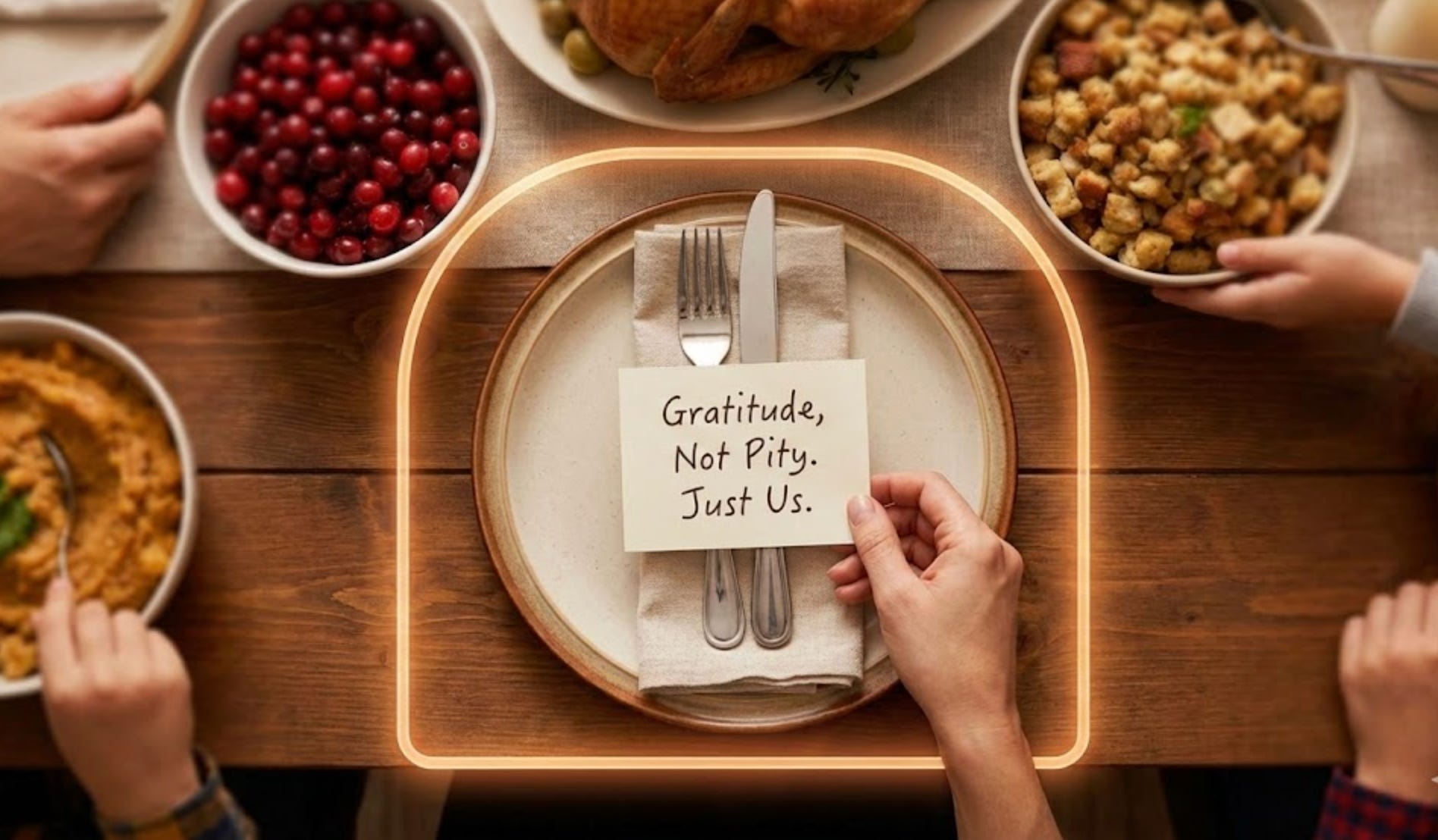
If you are dreading Thursday, I want you to know: You are not ungrateful. You are just protecting your peace. And more importantly, you have the power to change how this day goes.
The Thanksgiving of Dual Diagnoses
I know this dread intimately. My family has faced the “Cancer Thanksgiving” not once, but twice.
The first time was with my mother in the eighties. The second time, twenty years later, it was my sister. Both of them were diagnosed right before the holiday.
That second time is etched in my memory. It was heavy. My sister was only 29 years old. She was staring down chemotherapy and terrifying questions about her future fertility. I had just given birth to my son five days before Thanksgiving and had a toddler running around.
We were all really scared. That is the truth. There was no way to fake that everything was fine.
But we also knew one thing for sure: We did not want to spend Thanksgiving feeling depressed. We couldn’t fake toxic positivity—we couldn’t sit there smiling like nothing was wrong—but we also refused to let cancer sit at the head of the table.
So, we made a conscious, intentional choice. We decided that Thanksgiving was going to be a “battery charge.”
We focused on the chaos. Having a newborn and a toddler helped—babies don’t care about pathology reports; they need to be held and fed. We focused on the noise, the food, and the connection.
Was it perfect? No. I don’t even remember the food. I’m sure the kids and the emotions were messy. The future felt incredibly uncertain. But for that one day, we were just a family. We weren’t a ‘cancer family.’ We were just us. I talk more in the episode about the specific moment the tension broke for us and how having a newborn and a toddler actually became our secret weapon against the sadness. It wasn’t perfect, but hearing how we navigated that chaos might help you feel a little less pressure this week.
The Trap of “Fragility Mode”
The biggest obstacle to having a normal holiday usually isn’t you—it’s the people who love you.
Most people have no idea how to act around cancer. They are terrified of saying the wrong thing, so they default to what I call “fragility mode.” They whisper. They hover. They look at you with pity.
They don’t do it to be mean; they do it because they don’t have a roadmap.
If you don’t give them instructions, they will let their own anxiety drive the bus. And their anxiety usually looks like treating you like a patient instead of a person.
This is where you have to take your power back. You get to set the emotional temperature of your holiday.
If you don’t want people to whisper, you have to say so. If you don’t want to talk about treatment protocols over mashed potatoes, you have to draw that line. You are not being demanding or difficult. You are giving your family a gift: The gift of knowing exactly how to love you right now.
The Script: How to Set the Boundary
You cannot control the diagnosis, and you cannot control the fact that you are tired or scared. But you can control the rules of engagement for the dinner table.
I want to offer you a specific script. This is what works. You can send this via text before you arrive, say it on the phone, or announce it when you walk in the door.
Here is the three-sentence roadmap to save your Thanksgiving:
“I want today to be about being together, not about cancer.”
“Please don’t treat me like I’m fragile. If I need something, I promise I’ll tell you.”
“I may tap out early or take a break. That’s just part of where I am right now.”
Let’s break down why this works.
First, you are setting the agenda. You are permitting everyone to laugh, tell jokes, and talk about football. You are releasing the tension in the room.
Second, you are removing their burden of having to guess. When you say, “If I need something, I’ll tell you,” you are telling them they don’t need to hover. They don’t need to anticipate your every move. They can relax.
Third, you are protecting your physical limits. Cancer treatment is exhausting. By stating upfront that you might need a nap or need to leave early, you remove the guilt. You don’t have to apologize later; you’ve already set the expectation.
Reframing Gratitude
I know it can feel impossible to feel “thankful” when a diagnosis has upended your life. It can feel like a cruel joke to go around the table and say what you’re grateful for when you’re terrified about what’s coming next.
But gratitude, when you are facing cancer, isn’t about pretending nothing is wrong. It isn’t about ignoring the reality of the disease.
Gratitude is an act of rebellion.
It is choosing to focus on what you do have in this exact moment. It is looking at the faces around the table and realizing that right now, today, you are here. You are together.
My family wasn’t ignoring the reality of Thanksgiving. We knew what was coming. My sister was about to start chemo. But we chose to use the holiday as a moment of normalcy before the storm.
You have that same choice.
You can let the cancer take the holiday, or you can take it back. You can acknowledge the fear without letting it ruin the dinner.
So this year, send the text. Set the boundary. Tell them you aren’t fragile. And then, eat the pie. Laugh at the bad jokes. Let yourself just be a person for a few hours.
Because cancer may be in the room, but it does not get to carve the turkey.
Enjoy the holiday if you are observing.
P.S. If you use this script, let me know how it goes. And if you are feeling particularly shaky about the family dynamics—the uncles who give bad advice, or the cousins who stare—put the podcast in your ears while you’re driving to dinner. I’ll be right there in the passenger seat reminding you that you have the power to set the tone.
