

When I was diagnosed, I assumed I would lose my hair. It’s the universal cinematic shorthand for “cancer patient.” In movies, the protagonist cries in the shower as clumps fall out, then shaves it all off in a moment of defiant, sad music. This isn’t the case for every chemotherapy patient - but the movies never show that.
I didn’t want that scene. I didn’t want to look like a patient. I wanted to control who knew I was sick and who didn’t.
In this week’s conversation with Roxanne, a two-time survivor, we deconstructed the actual mechanics of Cold Capping. This isn’t magic; it’s biology. And, as with everything else in cancer, it requires a strategy.
The Core Mechanism: Freezing the Follicle
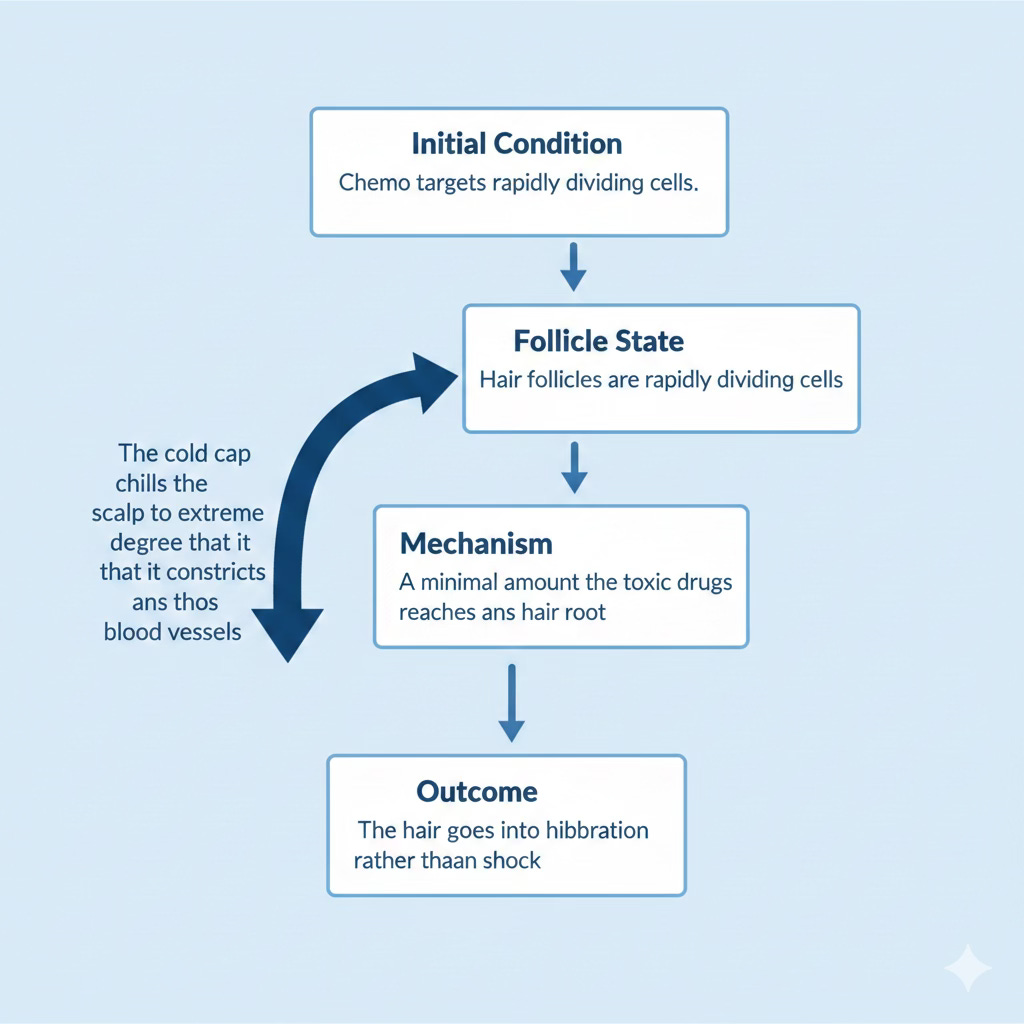
Roxanne explained the science simply: Chemo targets rapidly dividing cells. Hair follicles are rapidly dividing cells. The cold cap chills the scalp to such an extreme degree that it constricts the blood vessels.
“Basically, what it does is constrict the blood vessels around the hair follicles. And so it prevents the cancer drug from getting to the hair follicles... you’re basically kind of like tricking the chemo.” — Roxanne
By reducing blood flow to the scalp during the infusion, only a minimal amount of the toxic drugs reaches the hair root. The hair goes into hibernation rather than shock.
The Efficacy Matrix: Know Your Drug Protocol
This is where you move from wishing to planning. The success of cold capping isn’t random; it’s heavily dependent on the type of chemotherapy drug you receive. When you’re facing this decision, you have to be armed with the science of your specific protocol to set realistic expectations and maximize your chances. Talk to your oncologist about if your protocol responds well to cold capping to keep your hair.
Success rates vary dramatically by regimen:
Taxane-Based Regimens (High Success): Taxanes, like Paclitaxel and Docetaxel, generally have the highest rates of hair preservation. In clinical trials, success (defined as retaining 50% or more of your hair) is often reported between 65% and over 95%. For patients receiving weekly Paclitaxel only, some studies have shown hair retention rates near 100%.
Anthracycline-Based Regimens (Lower Success): These drugs, such as Doxorubicin (AC chemo), are more aggressive and more challenging to block. Success rates for retaining at least 50% of hair are lower, typically 16% to 47%.
Sequential (Anthracycline followed by Taxane): When combining these drugs, the results are better than anthracyclines alone, but less successful than taxanes alone, often showing hair preservation in the 44% to 78% range.
This data is not meant to discourage, but to empower. It tells you exactly where you need to be militant about the protocol:
Cap Fit is Non-Negotiable: If the cap doesn’t fit tightly, you will lose hair in the gaps. Do not let a nurse or medical assistant rush this. You need to ensure the cap is making contact across your entire scalp.
Pre- and Post-Cooling: You must chill the scalp for 30 minutes before the infusion and continue cooling for a specified period after the infusion ends to ensure the circulating drug clears your bloodstream. Roxanne sat there for hours with her manual caps; I sat there for hours connected to the machine. You trade time for hair.
The Two Paths: Manual vs. Machine
Roxanne and I used different systems, and you need to understand the logistics of both:
1. The Manual Method (Penguin Caps) This is what Roxanne did. It is a logistical beast using frozen caps kept on dry ice.
The Logistical Challenge: You have to change the caps every 25 to 30 minutes like a Formula 1 pit crew.
The Team: Roxanne built a “Cold Cap Brigade”—a rotation of friends who managed the dry ice and the clock. This turned a lonely infusion into a team sport.
The Ice: Roxanne’s husband carried in the dry ice necessary to keep the caps frozen. Now, many infusion centers have freezers for Penguin caps - but you may need to provide the pit crew. Ask your medical team.
2. The Machine Method (DigniCap/Paxman) This is what I used. You are tethered to a machine that circulates coolant, eliminating the manual swap.
The Reality Check: You are still stuck in the chair for hours post-infusion. And don’t rely on the clinic to manage the prep. When the medical assistants tried to mist my hair for conductivity, I laughed with them until they realized I needed a full-on soak squad. You must ensure your hair is thoroughly wet and protected before the cap goes on—take control of that process.
Vanity is a Survival Tool
Losing your hair is terrifying because it feels like the final surrender of your identity. It announces your diagnosis to the world, and that takes away your choice and your power.
“I think it comes back to the control... I think for me, again, also it comes back to how I wanted to be treated, how I wanted people to look at me as a person, not just as a patient.” — Roxanne
If you think worrying about your hair is “silly,” you need to reframe it. Keeping your hair means looking in the mirror and seeing you, not your diagnosis. It allows you to compartmentalize the disease: you are a patient on chemo day, but you are a person living their life the rest of the week.
We both kept our hair. It was tedious. It was expensive (New York state just mandated that insurance cover cold capping - 1 down, 49 to go). Yes, you often have to appeal insurance, which is what I did for 18 months. But for me, it was worth it. Roxanne’s experience was the same. It smoothed the transition to survivorship because when treatment ended, she didn’t have to wait two years to look like herself again.
Your Next Move: Choose the Swing
You can’t choose the pitch (the diagnosis), but you always choose the swing.
Ask for the Data: Ask your oncologist for the specific success rates of cold capping for your exact chemotherapy protocol. Don’t accept “it might work.” Demand the numbers.
Build Your Team: If your regimen is high-risk (like an anthracycline), compliance is even more critical. If you choose the manual route, let your friends—your Brigade—help you win.
Don’t let cancer decide everything. You don’t have to go through cancer looking like your diagnosis. Take this one piece of power back.
Your Next Step: Watch the Episode
You now have the science, the strategies, and the data to make an informed choice. But to truly maximize your power, you need to hear the emotional truth behind the logistics.
Roxanne and I walk you through:
The emotional power of maintaining your identity during the most challenging days.
The exact logistical swaps and schedule you need to manage the manual caps.
The conversation template for building your “Cold Cap Brigade”—the team that helps you win.
If you’re facing chemo, terrified of losing your hair, and desperate for one point of control, listen to the full episode now to get the complete playbook.
Listen on Spotify, Apple, and all audio platforms, or watch the full conversation on YouTube:@kickingcancersasspodcast
Podcast Link: Joelle Kaufman - The Podcast
YouTube Link: Cancer Doesn’t Have to Take Your Hair
The key studies and reviews used to generate the success rates are listed below:
For the 65% Taxane success rate and the 16% Anthracycline success rate (from the SCALP trial):
Study Title: Effect of a Scalp Cooling Device on Alopecia in Women Undergoing Chemotherapy for Breast Cancer: The SCALP Randomized Clinical Trial
Link (PubMed): https://pubmed.ncbi.nlm.nih.gov/28196254/
For the 47% Anthracycline success rate (from a multicenter Italian study):
Study Title: Scalp Cooling in Daily Clinical Practice for Breast Cancer Patients Undergoing Curative Chemotherapy: A Multicenter Interventional Study
Link (NIH/PMC): https://pmc.ncbi.nlm.nih.gov/articles/PMC6518988/
For the sequential regimen data (44% when Anthracyclines were first vs. 73% when Taxanes were first):
Study Title: Impact of chemotherapy regimen and sequence on the effectiveness of scalp cooling for alopecia prevention
Link (Semantic Scholar): https://www.semanticscholar.org/paper/Impact-of-chemotherapy-regimen-and-sequence-on-the-Villarreal-Garza-Mesa-Chavez/d6d68cfe8a4bd161238c1699e37d6ac40dbd6661
General review supporting the higher success of Taxanes over Anthracyclines:
Study Title: Scalp cooling therapy in chemotherapy-induced alopecia: addressing variability in cooling duration and efficacy
Link (PubMed): https://pubmed.ncbi.nlm.nih.gov/41174233/