
He's Been on Nine Lines of Treatment. He's Also Running Marathons
Episode #36: BILL THACH

Bill Thach has neuroendocrine carcinoma — a subtype of colorectal cancer so rare it affects roughly one in a hundred colorectal patients. When he was first diagnosed at 33, there were only four standard lines of treatment available for his disease. He’s now on his ninth.
He also just ran an ultramarathon.

That’s not a metaphor. He literally lined up, ran 26.2 miles, and crossed the finish line while immunocompromised, while managing a list of specialists that would embarrass most 60-year-olds — cardiology, neurology, and more — all courtesy of the toxic side effects that have accumulated from keeping him alive.
So when Bill talks about practicing suffering, he’s not describing a mindset. He’s describing a training protocol.
“I didn’t like running,” he told me flat out. “I still don’t like running. But when you’re running, it’s all on you. Once you’re hurting, every mile you’re questioning everything. And it’s the same thing with cancer.”
Running as rehearsal for the hardest parts of treatment — from a man who has had every reason to stop.
Bill didn’t find a support system until five and a half years in. He spent the first chunk of his diagnosis doing what most men do — normalizing his trauma, figuring it out alone, being “the patriarch.” His therapist eventually put a name to it. He wasn’t processing. He was just absorbing.

The turning point came from a postcard. Literally. A stranger handed him a postcard in a hospital waiting room for something called ManUptoCancer. He put it on his desk. Ignored it for months. Then he joined their Facebook group, watched men share their fears and their wins without weaponizing each other’s vulnerability, and for the first time thought: maybe there’s something here.
He went to their Gathering of Wolves retreat. His eighth line of treatment had just stopped working.
He came back with a purpose.
Now he’s their Director of Diversity, running chapters in Houston, and asking hard questions about why men of color are diagnosed later, access treatment less, and die at higher rates — not because the disease is different, but because the system around them often is.
You don’t get to choose the hard thing. But you do get to choose what you build with it.
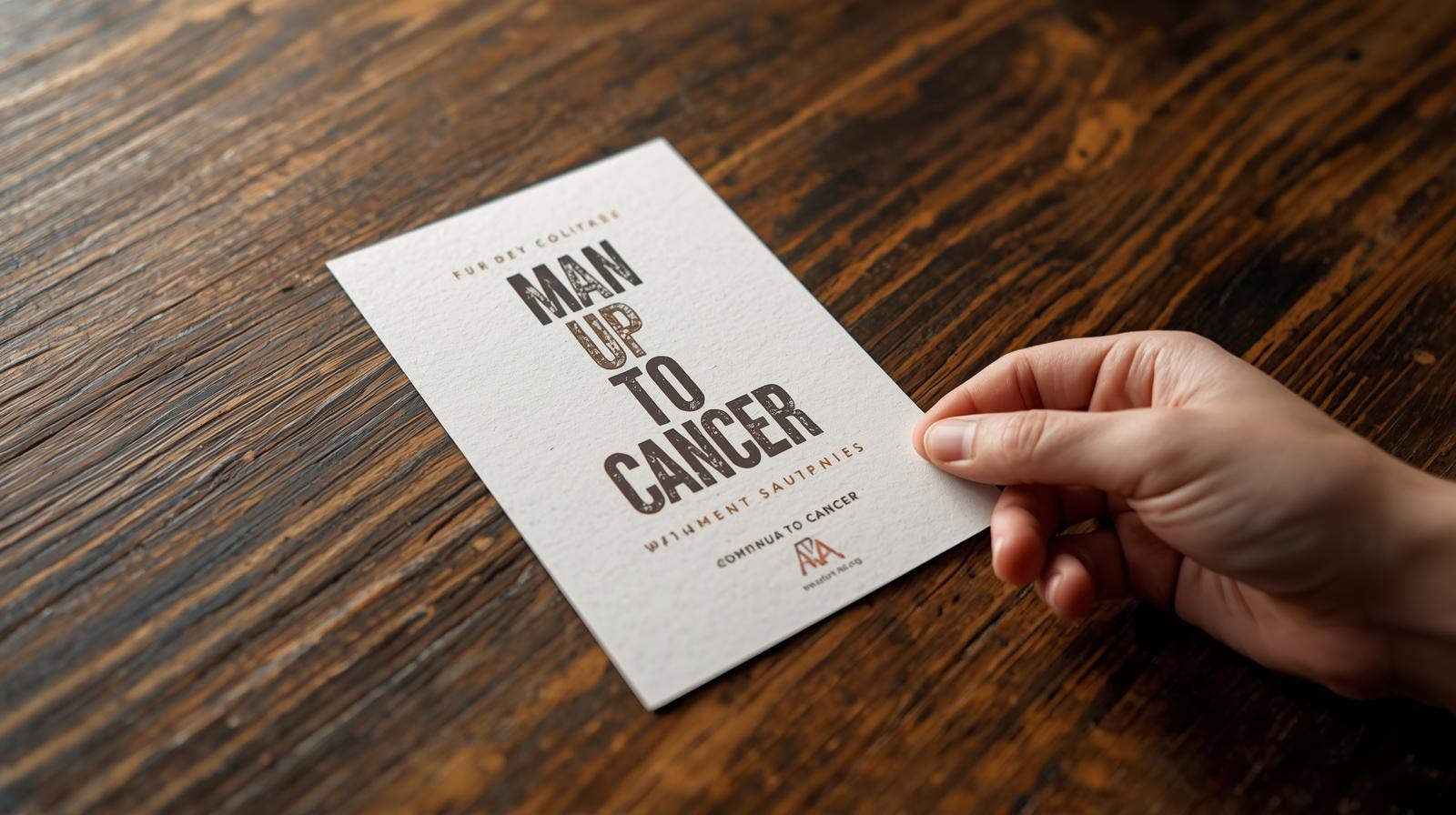
Learn more about ManUpToCancer
Listen to the full episode. And if the subscriber article is calling your name — it goes deeper on what the research actually says about why men like Bill are fighting a war on two fronts.