

A law on paper doesn't help you without your doctor's voice
I fought my insurance company for eighteen months over $1,800

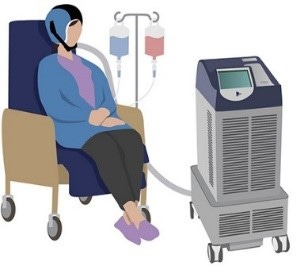
When my oncologist told me I’d need chemotherapy, she suggested scalp cooling to preserve my hair but let me know that it’s usually out of pocket. So I called my insurance company to find out if it was covered. They told me it was part of my chemotherapy benefit.
When I submitted the claim, it was rejected. First, because of the location and procedure codes. Then, because it wasn’t explicitly listed as covered (it wasn’t listed as excluded either), in my durable medical equipment benefit. The wig would be covered. Then they made the claims process so deliberately confusing that most people would have given up. Countless hours of research, negotiation, and on-hold music — over a treatment that was FDA-cleared, oncologist-recommended, and already approved by the same company I was fighting.

I was also lucky in a way that had nothing to do with the fight: my oncologist told me scalp cooling existed.
That conversation happened because I had a doctor who thought to have it. That is not a standard of care. That is an individual choice made by an individual physician, replicated inconsistently across the country, with consequences that are anything but abstract.
What the data says about that conversation
A 2022 national survey of oncology providers published in JCO Oncology Practice found that while 62% of providers supported scalp cooling therapy always or most of the time, only 26% reported actually initiating those discussions with patients consistently. The leading reason for not bringing it up was financial — 58% cited concern about cost, followed by efficacy concerns (31%), staffing or facility limitations (24%), and safety (15%).
More than half of the oncologists who weren’t having this conversation weren’t having it because they assumed it was out of reach financially. A decision made on the patient’s behalf, before the patient was in the room.
I want to thank Paxman for making this episode possible. When I was going through chemo at UCSF in 2023, I used their scalp cooling system. It worked. I kept my hair when I thought I’d lose it, which mattered more than I expected it would.
It’s the same technology that’s helped tens of thousands of cancer patients worldwide over the past 25 years.
This episode was recorded at the 2026 UCSF RiseUp for Breast Cancer Prevention & Women’s Health. Because of Paxman’s sponsorship, we can share research and insights from the UCSF RiseUp conference with you. If you’re facing chemo and want to explore scalp cooling, visit coldcap.com
Research on patient-oncologist communication consistently documents gaps between what patients want to discuss and what actually gets covered. In one survey of breast cancer and melanoma patients, 63% wanted to talk about the effects of cancer on other aspects of their life — only 35% actually did. Scalp cooling sits directly in that territory: it’s about side-effect mitigation, with identity, dignity, and daily life during treatment rolled into it. It’s also, in some cases, about whether a patient shows up for treatment at all.
Evidence suggests that up to 8–10% of women may consider refusing chemotherapy or opting for a less effective regimen specifically to avoid hair loss. That number has appeared in academic literature and state legislative analyses for years. It keeps surfacing because the underlying problem hasn’t been solved.
The legislative wins, and what they don’t cover
Two states have now mandated private insurance coverage of scalp cooling. New York and Louisiana were the first, with New York’s law taking effect January 1, 2026. As of March 2026, eleven states have active legislation. West Virginia’s bill passed both chambers and is heading to the governor. Seven additional states have pending bills: Kentucky, Massachusetts, New Jersey, Ohio, Pennsylvania, South Carolina, and Virginia.
That momentum is real. But a mandate requires a conversation to activate it. If a patient doesn’t know to ask, and her oncologist doesn’t mention it, insurance coverage sits unused.
There is also a harder structural limit. New York law applies to large-group fully insured policies — it does not cover self-insured employer plans, small-group policies, or government programs. Every mandate currently moving through state legislatures is built the same way: private insurance only. State legislatures have no jurisdiction over Medicare or Medicaid. The women most likely to be on those programs — older women, low-income women — are outside the reach of every bill being celebrated right now.
This is the gap Bethany Hornthal built Hair to Stay to fill. She spent five years getting scalp cooling through FDA clearance, only to watch the system fail to deliver it to the patients who needed it most. Over 8,000 subsidies and more than $5 million later, Hair to Stay remains essential not despite the legislative progress, but because of who that progress structurally excludes.
What to do, depending on where you start
The distance between a treatment existing and that treatment reaching you runs through your oncologist’s office and your insurance plan. Both gaps can be closed, but the path is different depending on your situation.
If your oncologist hasn’t mentioned scalp cooling, ask directly: “Am I a candidate for scalp cooling, and does your facility offer it?” Not every protocol is compatible. Blood cancers, lymphoma, leukemia, and immunotherapy-based treatments are generally not indicated. Breast, ovarian, and gynecologic cancers treated with the most common chemo regimens often are. Leading cancer centers, including Memorial Sloan Kettering, have developed standardized talking points to ensure patients receive consistent information about scalp cooling options and financial resources. The best centers have made this a system. Many centers haven’t.
If you have private insurance in a mandate state, Ask your insurer directly whether scalp cooling is covered under your specific plan type. The New York mandate applies to large-group fully insured policies — self-insured employer plans and small-group policies are excluded, even in states with laws on the books. Know what you have before assuming you’re covered. And if you are part of a self-insured plan, consider advocating with your Benefits Manager to add this low-cost benefit that maximizes the probability that a cancer patient can continue to work.
If cost is the barrier, regardless of insurance, Apply to Hair to Stay at hairtostay.org before assuming you don’t qualify. The application is designed to move fast enough to be useful before treatment starts. They prioritize underinsured and uninsured patients.
If you’re on Medicare or Medicaid: State mandates don’t apply to you. Hair to Stay is your primary resource. Paxman also maintains a Patient Assistance Program that functions as a safety net for patients who are underinsured or uninsured and meet the eligibility criteria. Pursue both simultaneously — treatment timelines don’t wait.
If your facility doesn’t offer scalp cooling: Ask whether another infusion site in your network does. Research suggests only roughly 40–60% of chemotherapy treatment locations currently offer automated scalp cooling. The facility you were assigned may not be the only option.
A mandate being passed is one thing. You knowing you have a choice is another. The second one is on you to create — but only if someone puts the information in your hands first.

Listen to the full conversation with Bethany Hornthal on Kicking Cancer’s Ass: [LINK]
Sources and further reading
Novice M, et al. “Identifying Barriers and Facilitators to Scalp Cooling Therapy Through a National Survey of the Awareness, Practice Patterns, and Attitudes of Oncologists.” JCO Oncology Practice, 2022. https://ascopubs.org/doi/full/10.1200/OP.21.00273
Maryland Health Care Commission. “Health Insurance Scalp Cooling Systems Required Coverage — Legislative Study.” October 2025. https://mhcc.maryland.gov/mhcc/pages/plr/plr/documents/2025/hb1187_scalp_cooling_system_mandate_study.pdf
Medscape Medical News. “Two States Now Require Coverage of Scalp Cooling to Prevent Chemo-Related Hair Loss.” January 2026.
Paxman. “Momentum Accelerates as 11 States Pursue Scalp Cooling Coverage Legislation in the U.S.” March 2026.
Risk Strategies. “New York Large Group Insured Policies Must Cover Chemotherapy-Related Scalp Cooling Devices in 2026.”
Oncology Nursing Society. “Reimbursements Are Making Scalp Cooling More Accessible for Patients With Cancer.” November 2024.
Paxman Patient Assistance Program. https://paxmanscalpcooling.com/access-support/us-access-and-support/
Hair to Stay — subsidy application.
https://hairtostay.org